Category: Authors

  • Are We in the Pre-War Period?

    Are We in the Pre-War Period?

    GOCCOM · Türkçe | Deutsch | Français | Italiano | English

    2 November 2026 | Fundamental and human rights, peace policy, international solidarity

    Watch him speak here of a turning point in history.
    It is socialism he promises you.
    But behind him, see the work of your hands:
    Great cannons, silently trained upon you.

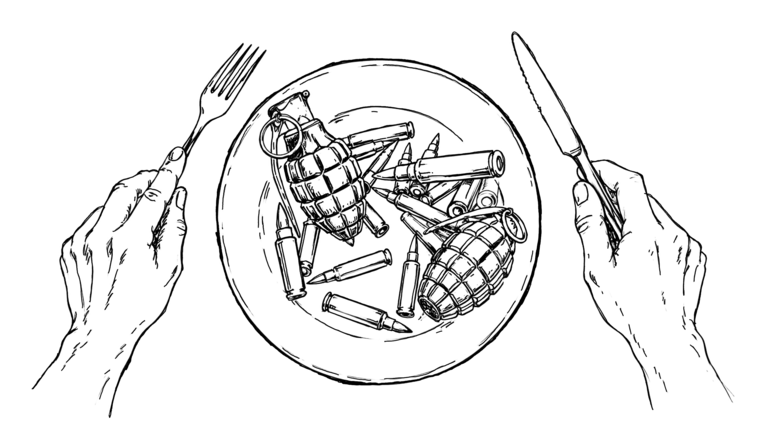
    Bertolt Brecht, War Primer (Kriegsfibel), 1955

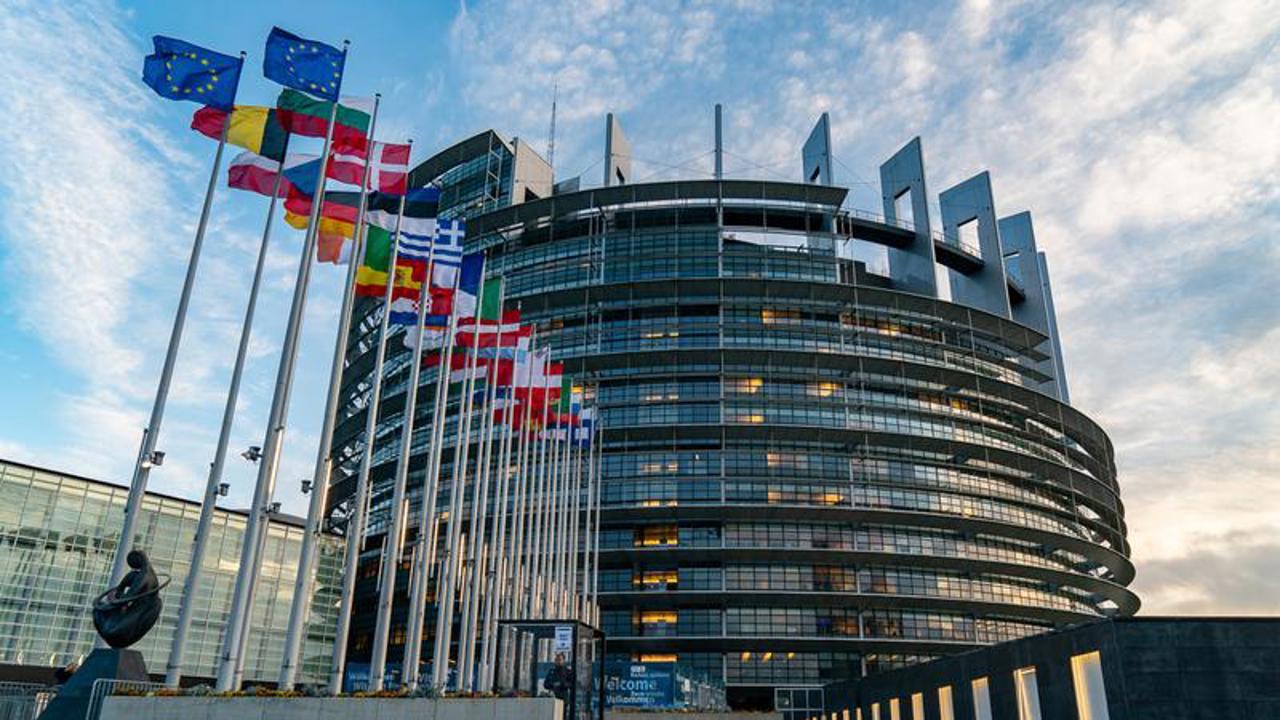
    Europe is rearming, and Switzerland is joining in. This November we are already voting on expanding exports of war materiel (see article on page 2), while the Council of States has debated how to make an enormous rearmament package possible.

    A debt-financed fund of 24 billion Swiss francs is to be created as early as 2027. What is particularly brazen is that the fund is initially planned without any counter-financing. Later the population will be presented with a fait accompli. The choice will then be: higher value-added tax or a new austerity package targeting essential public services. December will reveal the position of the National Council.

    The debate already shows how one-dimensional the discussion of security has become. Financing “national security” always comes at the expense of “social security”. In Germany, cuts to social spending are already being felt. The real blow will come when interest payments on the debt fall due, according to calculations by Dierk Hirschl, chief economist of the German trade union ver.di. Here too, weapons are being paid for with debt. As Ingar Solty puts it: “Quite possibly some of the population will then realise that the housing problem and the childcare crisis cannot be solved by having us all live in tanks and dropping our toddlers off at the barracks in the morning.”

    What is new in Germany is that the ideology of rearmament is also taking hold among the population. Solty calls this an “internal turning point”. Ostensibly, the rearmament debate is about defensive military expansion. Russia’s war of aggression against Ukraine, systematic violations of international law and Putin’s repeated nuclear threats have created a real, not merely manufactured, need for security in Europe. Less officially, but clearly, the EU is also pursuing proactive rearmament as a new geopolitical “power project [of a] German-dominated EU alongside or independently of the United States” (Solty).

    The decisive question is therefore not merely how much Europe is rearming, but what rearmament does to society. Today it is presented as the seemingly inevitable response to an insecure world. Yet it is not simply a reaction to external threats. It changes political priorities, ties up enormous public and private resources, and shifts our ideas of what security means. Militarisation thereby becomes a social project in its own right.

    Despite its neutrality, Switzerland is deeply integrated into Europe geographically and economically. To answer the question of the pre-war period in Switzerland, we must also examine the dynamics within the EU and NATO.

    Who is driving the rearmament spiral?

    NATO’s previous spending target of two per cent of GDP was replaced in 2025 by a new target of five per cent by 2035. This encompasses not only traditional military spending but also defence-related infrastructure. The target was pushed particularly aggressively under Donald Trump. At the same time, the five largest arms companies in the world are based in the United States (see Solty). Rearmament is therefore not only security policy but also a form of military Keynesian economic stimulus that makes dividends soar.

    Switzerland is also considering such a debt-financed arms fund. Meanwhile, millions are already invested through our pension funds. The WAV research group revealed that at least eight Swiss pension funds hold stakes in arms companies worth 638 million francs. These include companies developing nuclear weapons and cluster munitions, whose financing is in principle prohibited by the War Materiel Act. The relaxation of that law, on which we are voting in November, would further fuel European rearmament. The main beneficiary would be Germany’s Rheinmetall. In 2025, the State Secretariat for Economic Affairs (SECO) approved war materiel exports worth 2.77 billion Swiss francs. Seventy-one per cent of that value went to three Rheinmetall subsidiaries and joint ventures. Rearmament has long been a Swiss business too.

    But foreign policy involves more than the arms industry. Europe’s foreign policy consensus combines economic interests with geopolitical power projection. Solty identifies two ideal-typical tendencies in the foreign-policy establishment: “On one side are the Atlanticists, who pursue global power projection as privileged partners of the US […]; on the other are the German-European geopoliticians, who seek military capacity to act independently of the US (and NATO).”

    How Switzerland, a small military but significant economic player, will position itself in this field of tension remains unclear. But it can be expected that these strategic foreign-policy decisions will be made on the basis of economic interests.

    As socialists, we should not enter this minefield. The question must not be with whom we will rearm and become “war-ready”, but how we can restore the capacity for peace. “To be capable of war means to possess the willingness and ability to endanger other people’s lives and livelihoods, as well as one’s own,” writes Maja Apelt. How, then, can we prevent killing organised hierarchically through a division of labour?

    Apelt identifies three fields of intervention in militarisation:

    Material militarisation: The immense allocation of economic resources to rearmament. Arms companies benefit while money is lacking for other tasks, such as education and social provision.

    Ideological militarisation: This concerns the moral, ideological and psychological rearmament of the population. Defence is to become part of everyday thinking. This field is also linked to psychological and bodily armouring, the glorification of particular forms of masculinity, and the confinement of women to childbearing. One example is the French state campaign to encourage births, launched under the slogan “demographic rearmament”. A militarised society needs children and a public willing to accept young people’s lives being sacrificed in war as part of a “necessary defence”.

    Institutional militarisation: The army itself is to be strengthened through massive investment in technical and technological equipment and intensified recruitment. Switzerland has its own version of this development in the tightening of civilian service rules and the referendum narrowly lost on 14 June 2026.

    But when does the pre-war period begin?

    The public discourse on rearmament presents it as unavoidable. “If you want peace, prepare for war” is the watchword. By this logic, arms manufacturers would be the world’s most effective peace activists, Ingar Solty writes sarcastically. Yet violence needs legitimacy, particularly when organised by liberal democracies. I painfully remember the justification of the invasion of Afghanistan as the liberation of Afghan women. Those were the very women whose protection is once again being called into question today, although they are expected to live under precisely the regime from which military intervention once promised to free them. We must therefore firmly resist this normalisation of war as an instrument of politics, even when it comes wrapped in a liberal promise to protect women.

    In Cassandra, Christa Wolf has her protagonist ask questions that invite action: “When did the state of war into which we are increasingly being pushed actually begin? And how did we reach the point where, supposedly, there is no going back?” (see Brunner). Wolf introduces the concept of the pre-war period, whose rules must be spoken aloud, written down and passed on. “Among other sentences, it would say: Do not let your own side deceive you.” (Wolf)

    One such deception is making militarisation appear modern, inclusive and even emancipatory. Greater participation by women in military institutions does not change those institutions’ logic of violence. Instead, it may help give militarisation renewed social legitimacy.

    Another deception is the claim that deterrence, rearmament and nuclear weapons have no alternative. According to Brunner, the “European peace project” is thus to be transformed into a defence union. This is not only about accepting militarisation as the lesser evil of realpolitik, but about shifting our inner attitudes towards an immaterial general mobilisation. What we feel, think and internalise precedes the violence of war and outlasts it.

    Switzerland cannot simply evade these realignments. But that does not necessarily mean joining Europe’s rearmament spiral.

    We therefore need a counter-narrative. A feminist foreign policy alone is not enough unless it also questions militarisation and the social conditions that sustain it. Feminism must also mean asking what forms of security we actually want to create. Our task is to develop a security project that genuinely brings together social, ecological and civilian security.

    War does not begin only when weapons are used. It arises from economic interests, geopolitical power relations, nationalist narratives and patriarchal assumptions about who should protect and who should be protected. We must not limit ourselves to denouncing the excesses of particular wars. We must recognise the connections among militarism, nationalism, colonialism, imperialism, capitalism and patriarchy — and name those who benefit from them.

    That also means thinking and speaking about security not primarily in national terms, but from below. A society is secure only when people have homes, when care work can be performed, when healthcare is accessible and when the foundations of life are preserved. This is true internationally, not only in Switzerland. Free-trade agreements presented as purely economic matters therefore affect the capacity for peace just as military cooperation does. Political decisions on the 24-billion-franc rearmament package and the upcoming vote on the War Materiel Act are questions of class. The Swiss arms lobby also wants its share of the global militarisation pie. We pay for it through the erosion of social security, setbacks in feminist struggles and the emotional armouring that prepares us inwardly for war. We should not be surprised when authoritarian and fascist forces grow in such soil.

    The pre-war period began a long time ago.

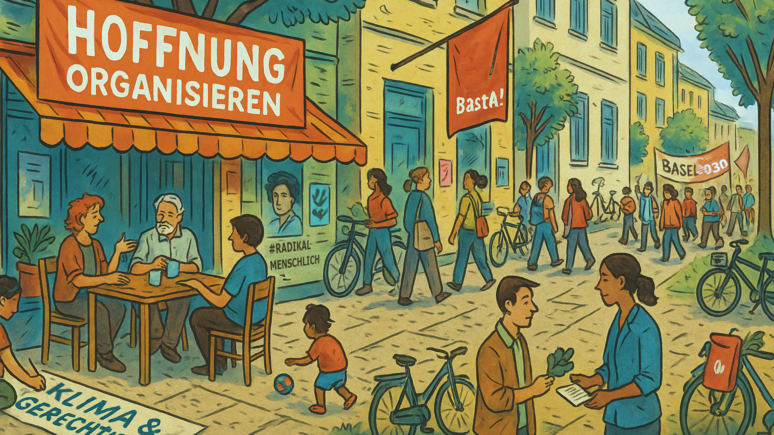
    Franziska Stier, Party Secretary, BastA!

    Sources and literature

    Jutta Weber: https://www.zeitschrift-luxemburg.de/artikel/wider-den-vorkrieg
    Ingar Solty: https://www.zeitschrift-luxemburg.de/artikel/die-ideologie-der-inneren-zeitenwende
    Maja Apelt: https://www.zeitschrift-luxemburg.de/artikel/das-geschlecht-der-kriegstuechtigkeit
    Jan Jirat: https://www.woz.ch/2640/ruestungsreport-2026/lex-rheinmetall/!GPT99DHJ3XJK
    https://www.saldo.ch/artikel/artikeldetail/pensionskassen-investieren-viel-gel-in-ruestungskonzerne
    https://wav.info/recherchen/wav-daten-ermoeglichen-ruestungsrecherchen

  • SERBIA: THE GOVERNMENT THE STUDENTS BROUGHT DOWN

    SERBIA: THE GOVERNMENT THE STUDENTS BROUGHT DOWN

    Seyhan Uludag

    On 1 November 2024, the concrete canopy of the recently renovated railway station in Novi Sad, Serbia, collapsed. Fourteen people died at the scene, and two seriously injured people died later. Sixteen deaths raised clear questions: Who carried out the renovation? Who supervised the construction? How was public money spent? Why were those responsible not held accountable?

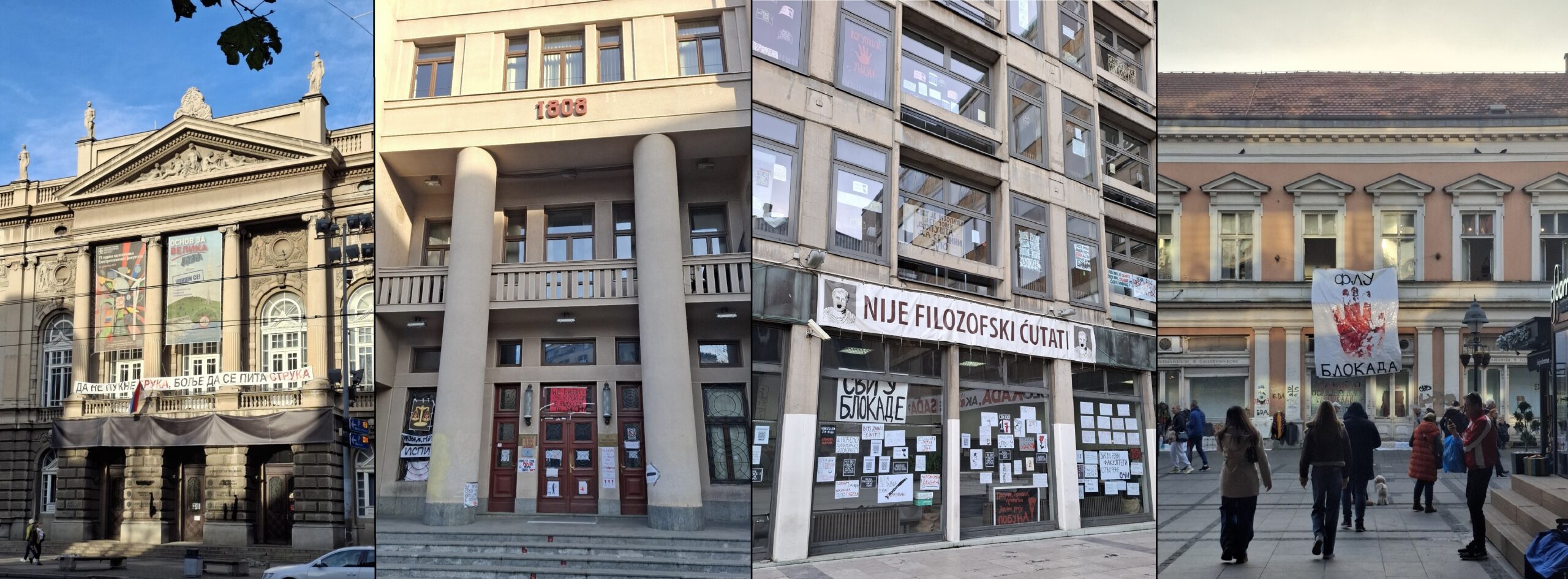
    Aleksandar Vučić’s government could not suppress the resulting anger. University classes were boycotted, faculties occupied and marches organised between cities. Despite police interventions, attacks and political pressure, the students refused to retreat. Workers, teachers, farmers and different social groups joined their struggle.

    For two years, the students did more than protest. They made decisions in university assemblies, created their own organisations and built a political alternative independent of traditional opposition parties.

    According to the announced results of the 25 October 2026 election, the Student List won 52.65 percent of the vote and Vučić’s alliance 39.22 percent. The political bloc that had dominated the country for years suffered electoral defeat in the face of the organised struggle initiated by the students.

    Serbia’s students did not simply wait for a change in power. They organised the social force capable of bringing it about.

    But the historical significance is not confined to which party won how many seats. By rejecting the notion that politics was a privilege shared by government and traditional opposition, students raised a fundamental question: Why must society continually delegate the right to decide its own fate to someone else?

    The movement against the government expanded from university boycotts into mass demonstrations. Workers, teachers, farmers and different social groups met in the space of struggle opened by the students.

    Yet its historical significance was not simply the breadth of social support.

    In university assemblies, students began making decisions together. Through debate, disagreements and the search for common decisions, they forged a political will outside professional party politics.

    The experience exposed a central contradiction of our times: Why is the people excluded from decisions determining their own lives in political systems supposedly founded on popular sovereignty?

    In parliamentary democracy, society’s political role is often reduced to the right to vote. After elections, governing power passes to representatives while capital retains decisive influence over the economy, property and production.

    People can therefore be legally equal citizens without having equal power to shape social life.

    The organising methods of Serbian students intervened in the political side of this contradiction.

    They showed that the right to decide does not belong exclusively to elected representatives and that society can form its own organised collective will.

    This has precedents. From the Paris Commune to workers’ councils, different historical experiences of direct democracy emerged from attempts to overcome the separation between representatives and those they represent.

    It would nevertheless be wrong to equate Serbia’s student assemblies with those experiments. Their class content and historical circumstances differ. Yet they raise the same fundamental question: Will political power be concentrated in a ruling stratum detached from society, or will society become an organised force able to govern its own life?

    This is the deeper significance of the Serbian experience.

    Rather than joining the traditional opposition, students created their own political alternative. Their choice expressed not only opposition to the government, but also mistrust of existing forms of political representation.

    One of the clearest examples of this political intervention was the way parliamentary candidates were selected.

    In conventional political parties, candidate lists are generally determined through processes dominated by leaders, party executives and political power centres. Serbia’s students instead brought candidate selection into university assemblies. Names proposed by faculties were debated, and the views of universities assessed nationally.

    The resulting list of 250 candidates prioritised people who had not previously held senior political office. Academics, doctors, artists, activists and athletes were among those chosen.

    The importance of that choice goes beyond recruiting people who are not career politicians.

    The essential distinction is between the right to stand as a candidate and the power to choose who stands.

    Rather than creating a new political elite from within their own ranks, students attempted to appoint representatives from different parts of society. They suggested that politics could be a public responsibility organised and supervised by society, not merely a route to office.

    Yet there is a contradiction here too. Whether a movement that collectively chooses its representatives can retain the same power to hold them accountable after they enter parliament is not yet known.

    Letting people choose candidates is an important democratic step. But preventing elected representatives from becoming a new political power independent of the public requires lasting structures of organisation and oversight.

    Discontent with the existing political class must not automatically be understood as a break with class relations.

    Students do not constitute a social class. They come from different economic and ideological backgrounds and have come together in a common struggle. The coexistence of progressive, conservative and nationalist currents does not change that fact.

    People united against government corruption do not necessarily share the same views about ownership of the means of production, wage policies or capital’s social power.

    The democratic character of a movement and its class character are not the same thing.

    That distinction matters because corruption is not the only source of inequality under capitalism.

    Even if every public contract were completely transparent and no official enjoyed privileges, private ownership of the means of production and wage labour could continue.

    The end of corruption does not mean the end of exploitation.

    The students’ electoral victory is therefore a democratic achievement, but it does not signify that social property relations have already been transformed.

    The movement’s solidarity across national and cultural boundaries also deserves attention. The participation of Bosniak young people in protests matters in view of the Balkans’ painful historical legacy.

    When communities divided by nationalism unite around shared democratic demands, social struggles can also challenge national prejudices.

    Whether that solidarity endures will depend on how the equal rights of different peoples and their historical grievances are handled politically.

    Serbia is also a crossroads of international power struggles. Competition among the European Union, the United States, Russia and China strongly influences the country’s economic and diplomatic relations.

    To reduce every mass popular movement to foreign interference simply because imperialist interventions have historically occurred is to make social contradictions invisible.

    Relations with foreign capital must also be examined through the economic decisions of existing rulers, not only those of the opposition.

    The plan to open the site of Belgrade’s former General Staff building, damaged during NATO bombing, to a luxury investment project linked to Jared Kushner’s company is one example.

    It exposes the tension between the rhetoric of national sovereignty and the interests of international capital.

    A country’s independence concerns more than its flag and borders. It also concerns who controls its land, public assets and social wealth.

    After the Serbian elections, all these contradictions enter a new political period.

    The broad social coalition formed around the students will be tested by economic decisions taken in government. On wages, privatisation, public services and foreign investments, different interests within the movement may come to the surface.

    It is precisely here that the future of the students’ organising experience becomes important.

    Can the collective will born in universities and streets remain independent after it enters parliament? Or will electoral victory lead it to transfer its own political power to representatives and reproduce the old relationships?

    Political oligarchy is not merely the lengthy rule of certain individuals. It is society’s exclusion from decision-making and the transformation of politics into the preserve of a privileged governing circle.

    A transfer of government therefore does not in itself prove the end of political oligarchy.

    That is why I do not see the students’ success in Serbia as merely an election victory.

    They defeated a power regarded as unchangeable while demonstrating that society can organise its own political strength.

    There is no need to romanticise this historical experience. A social revolution has not yet taken place in Serbia. But an important struggle showed that political change need not be confined to choosing among existing parties.

    Other countries have reason to reflect on this.

    Change may arise not from waiting for a new saviour but from people creating their own organisation and political will.

    Yet its true measure is not just votes won, but how much power working people gain over production and government.

    Serbian students overthrew a political bloc. Their historical test now is whether they can build not only new leaders but new social relationships in which society has more say over its future.

    The collapse of a concrete canopy at a railway station became the beginning of a movement demanding accountability from the state.

    That movement now shapes the direction of government.

    What happens next will depend on whether the path opened by students leads to a new political elite or a social transformation that expands the organised power of the people.

  • FRANCE: WHEN ANGER BECOMES COLLECTIVE

    FRANCE: WHEN ANGER BECOMES COLLECTIVE

    Seyhan Uludag

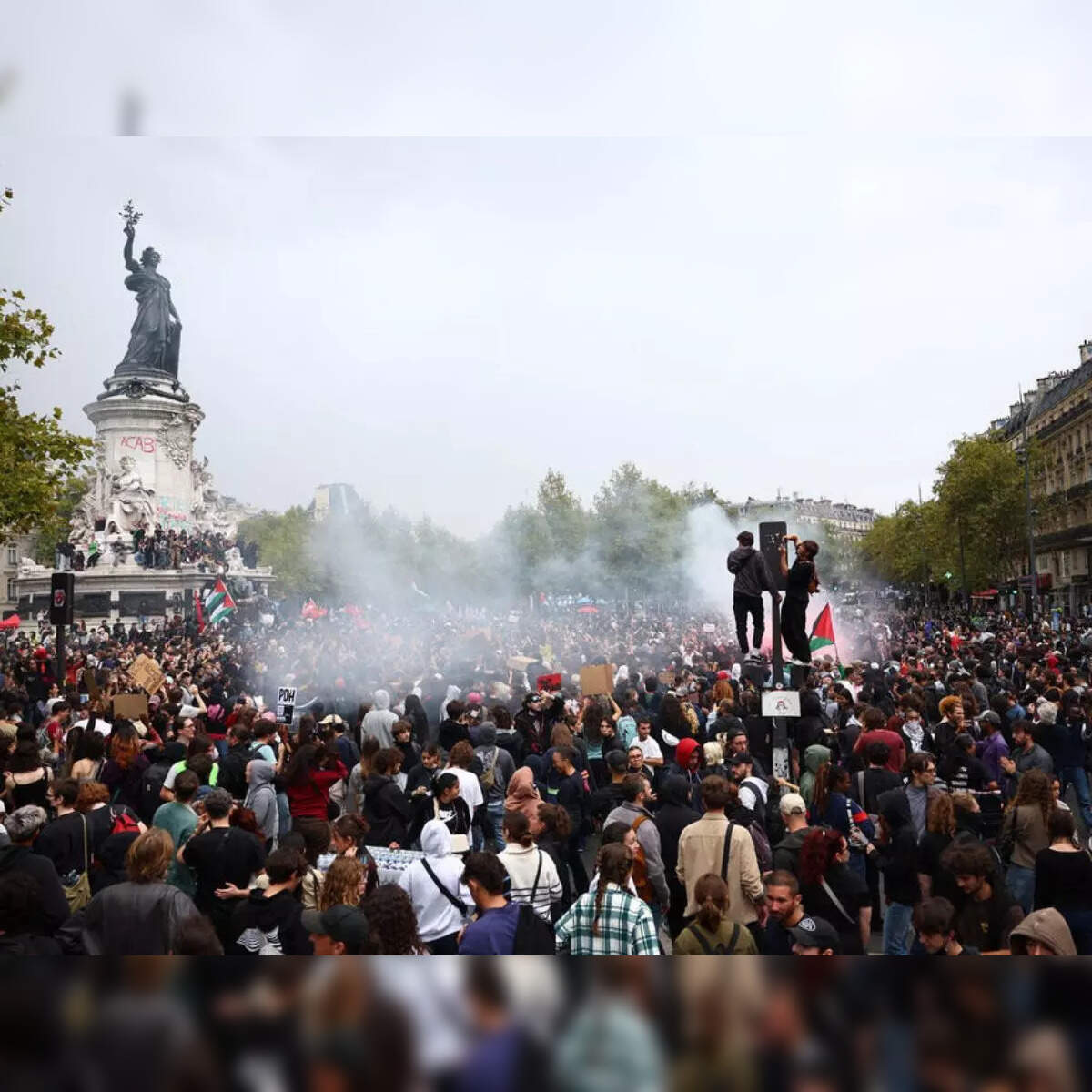
    In France, young people demand their future, workers the fruits of their labour, and pensioners the right to live with dignity. Classrooms without teachers, worsening living conditions, problems in public services and distrust of political power are concrete causes of the anger building in the streets. Protests against the Macron administration have moved beyond any single reform or government decision. The problems experienced by different social groups have the potential to converge around contradictions generated by the same economic and political order.

    What is truly unsettling in France is not that people are becoming angry, but that their anger is beginning to find common ground.

    Someone who once regarded their poverty as personal failure, unemployment as fate and lack of prospects as an individual dead end reaches another level of awareness upon discovering that millions share that same predicament. This is where anger becomes social. When a connection emerges between a student’s stolen future and a worker’s poverty, between a pensioner’s financial hardship and declining public services, separate protests can develop into a common political challenge.

    For what shakes a social order is not the scale of poverty, but the moment those being impoverished begin to question its causes together.

    Capital maintains its dominance not only by exploiting labour but also by dividing the exploited. Politics that pits a worker against a migrant, one poor person against another and an unemployed person against someone in work conceals the real sources of inequality. The fear of migrants fuelled by the far right and the economic order defended in the name of stability by centrist politics seek, from different positions, to direct social discontent. In one case anger is redirected towards another target; in the other its limits are drawn. The exploited are thus encouraged to confront one another, while exploitation itself remains unquestioned.

    The greatest danger to an established order is not a growing number of hungry people, but their coming together to question the causes of their hunger.

    France’s streets carry not only today’s anger but also the traces of historical reckonings suppressed in this country. The conditions that gave rise to the Paris Commune in 1871 are not those of today. Yet the Commune’s historical importance lies not simply in an uprising, but in the oppressed themselves raising the question of who should hold political power. The workers of Paris asked a question that went beyond replacing their rulers: Why should those who sustain a society not have a decisive say in governing it?

    The Commune was crushed in blood. But what was suppressed was not merely an experiment in government; it was a historical possibility demonstrating that working people could determine their own fate. To claim that the Commune is being reborn in France’s streets today would be easy romanticism. What matters is that, after so many years, the same fundamental contradiction persists in different forms: Those who produce wealth are still not those who control it. This is history’s unsettled account.

    The answer to this question cannot be found at the ballot box alone. Elections can change governments; but as long as ownership of the means of production, the economic power of capital and labour’s dependence remain in place, limits to political change remain as well. The fall of a government is not the end of a system of exploitation. A change in who holds political office does not mean that control over social wealth also changes hands.

    Solidarity against the devastation in Gaza, which resonates in France’s streets, carries a significance of its own. The rejection in other lands of the suffering inflicted on one part of humanity shows that national borders cannot entirely confine political conscience. Yet the true strength of solidarity lies not only in witnessing suffering, but in questioning the political and economic relations that make it possible.

    I do not see a crowd in France’s streets that should be romanticised. I know too much history to mistake anger itself for revolution. We know how unorganised anger disperses, how rebellion that fails to develop into consciousness is exhausted, and how people’s suffering can be turned against them once again. History is full of such examples. When anger does not understand its own causes, it can once again become a weapon in the hands of the very order that produced it.

    That is why the issue is not how many days the streets will remain full, how many governments will be shaken, or who will win an election. The issue is how far the relations that sustain labour’s dependence on capital will be questioned. The power of social anger lies not in the number of people in a crowd, but in the capacity of separate struggles to develop into a shared consciousness and an organised will.

    This is the decisive question in France today: will people challenge only the consequences of the lives imposed upon them, or will they also debate changing the relations that produce those lives?

    A society’s true breaking point is not the moment people can no longer endure, but the moment they understand together why they have been forced to endure.

    For an established order does not fear people becoming angry one by one; it fears the moment they realise they are no longer alone.

  • Izmir’s Fat Man

    Izmir’s Fat Man

    Seyhan Uludag

    Cemil Tugay’s move to the AKP did not surprise me. I did not wait for Erdoğan to pin the party badge on him before criticising him. In my earlier articles, “Where Shamelessness Becomes Institutionalised: Attendance Fees” and “The Name of Social Fascism in Izmir: Demand Your Rights and You Will Meet the Gas”, I had already questioned the political ethics now being debated again, through his treatment of workers. To me, who a politician is becomes clear first through whose interests he uses his authority to serve, before the values he recites from a podium. I had looked at where he stood in relation to the workers. Today, I look from the same standpoint.

    To me, the badge pinned on 7 October is not a fresh start that erases the past; it is a political choice that requires us to reassess the approach to administration I had already criticised. A few sentences about serving the public cannot settle the account for that choice. The mayoralty is not a personal fortune that its owner can carry wherever he pleases. It is a public office won through the votes of a city. Whoever holds that office cannot disregard the political expectations behind the support he received.

    The mandate given by voters is not the mayor’s personal title deed. Anyone who packs the will expressed at the ballot box into the luggage of his own political journey and carries it to another party must answer to the electorate. Of course a person can change his views. But the freedom to change one’s views does not create a right to take along the votes cast against those views. Political ethics begins precisely here: do you bear the cost of your own decision, or do you make those who trusted you pay it?

    This was the issue I addressed in my earlier articles. I questioned how privileges at management level were defended while workers’ livelihoods became an item in a savings calculation. I examined the thinking behind the management of municipal companies and why labour was treated as an expense. The question I raised under the heading of attendance fees went beyond the name of a payment: when public resources were distributed, who was protected and who was asked to make sacrifices? Are we supposed to forget that question when judging the political morality of the mayor who has now changed parties?

    In the life of someone who has been dismissed, the word “savings” is not abstract. It means rent that cannot be paid, medical treatment postponed, being unable to meet a child’s needs. As a line disappears from a management report, a household loses some of its sense of a future. This is where the claim to socially responsible local government is tested. An approach that presents the devastation experienced by workers as an administrative necessity and expects them to be patient renders the social cost of its own decisions invisible. My objection was to that invisibility.

    That is why I will not reduce the issue today to the sentence, “He was elected for the CHP and switched to the AKP.” That sentence describes the political change that has taken place; it does not convey the entirety of my criticism. I criticised him when he was wearing the CHP badge too. I did not accept his election for an opposition party as a reason to refrain from questioning his treatment of workers. I did not tie my political loyalty to a mayor’s office. My yardsticks were workers’ rights and public responsibility.

    Those expressing surprise today also have questions to ask themselves. Why are an officeholder’s political ethics discussed only when he changes parties? Why is the same attention not paid when workers protest? Does an approach to administration that is overlooked as long as someone remains in one’s own party become a problem only when he joins another? If the issue is principle, that principle must apply to everyone. Workers’ rights are not an item to be postponed in the calculations of internal party politics.

    My earlier articles are not evidence that I knew this switch would happen. Knowing who will join which party and when is one thing; recognising the moral problem in a politician’s practices is another. I did the latter. I wrote my objections to Tugay’s political ethics before today’s badge existed. Returning to my earlier texts, this is what I am saying: there was no need to wait for him to change parties before beginning to ask these questions.

    Joining the AKP is his own decision. But voters also have the right to object to that decision being presented as though it had been taken on behalf of the people of Izmir. Izmir’s political will cannot be relabelled through one person’s choice. The people of the city cannot be considered to have automatically changed parties in their mayor’s wake. Holding on to the office does not mean still holding all the trust that made that office possible.

    Cemil Tugay wears a new badge today. My questions remain: what responsibility did you assume towards the workers? What did you promise those who elected you? How do you explain today’s decision in relation to those promises? Political ethics cannot be built by evading these questions and taking shelter in the shadow of a powerful podium.

    For me, this is not about the comfort of saying, “I told you so.” Being proved right does not make good the loss suffered by someone who has lost their job; it does not restore voters’ broken trust. It is about opposing the reproduction of the same blindness. Challenging the surprise shown when the badge changes by those who would not listen when workers were speaking.

    My judgement was not made at the sight of the new badge. It was formed by his stance towards labour. Today his party has changed; the standpoint from which I demand accountability remains the same.

  • The Price of Being Deceived: Either Stupidity or Fraud – Ahmet Nesin

    The Price of Being Deceived: Either Stupidity or Fraud – Ahmet Nesin

    If someone asked me to describe Erdoğan, if they asked, “How do you know him, how do you see him?”, I could perhaps talk for hours. Or maybe I could explain it in a single sentence. The sentence that matters, both for me and for Turkey, is this: he should not keep deceiving people and then come out saying, “I was deceived.”

    Whenever Erdoğan is mentioned, Sülün Osman immediately comes to mind. He too was someone who deceived people. But there is an important difference between them: Sülün Osman does not say “I was deceived”; he tells you how he deceived others. As a journalist who conducted the last interview with Sülün Osman, I can say this comfortably. Their similarity lies in deception; the difference is that Sülün Osman boasts about it, while Erdoğan says “I was deceived” after every incident.

    At a certain point, doesn’t saying “I was deceived” amount to calling yourself an idiot? If I am deceived this often, shouldn’t I say, “I am an idiot. What do you want from me? Leave me alone”?

    In the old days, children and grandchildren tended to trick their grandparents rather than their fathers and mothers — because they did not quite have the nerve for the latter, and neither would we. They took advantage of the generation gap and of events the older generation had not lived through. Erdoğan, however, is a complete specialist in this; a specialist in deception who constantly says, “I was deceived.”

    So what are the cases in which Erdoğan says he was deceived? Let us use his own full sentences.

    Regarding 17-25 December, he says: “We were deceived; we were truly naïve.” But this is interesting. When you listen to him speaking with Bilal on the phone, you understand that he was not deceived. They discuss how the people’s money was taken, how it was obtained, how it was kept at home, and what should now be done with that money. Bilal’s difficulty in understanding what his father is telling him is another part of the story.

    Then he turns to the Gülen movement and says again, “We were deceived; we were truly naïve.” In other words, it is as if he is saying: we thought they would keep this secret; we set out on this road together, we deceived these people together, but now they are telling everyone that I deceived them.

    The period when an investigation was opened into Hakan Fidan, then head of the MİT, is also important. Erdoğan tells Bülent Arınç, who is in the United States and is going to meet Fethullah Gülen: “I cannot come; I have a lot of work. Do they have an order for me, an order for us? Do they have any criticism? Find out.” Everyone thinks relations with the Gülen movement broke down after the Hakan Fidan affair. No, he is still waiting for instructions.

    Again, at a rally in Uşak on 27 February, speaking about the Gülen structure, he says: “We are being deceived, we were deceived. Even I was deceived.” In other words: “Even I am an idiot.”

    When the AKP was first founded, it did not have enough cadres in the bureaucracy. A significant part of the bureaucrats from the Milli Görüş tradition had remained with Saadet or within the Refah line. The AKP relied on the Gülen movement at this point. And from its own point of view, the Gülen movement took advantage of this opportunity, “rightfully” in quotation marks.

    In 2015, Erdoğan had said of the Ergenekon and Balyoz trials, “I am their prosecutor.” He and Kılıçdaroğlu stood on opposing sides over this issue. Then, on 19 March 2015, Erdoğan said: “Through these operations, the entire country, myself first and foremost, was misdirected and deceived.”

    Fine, let us say you yourself were deceived; but why do you declare that the entire nation was deceived? How exactly were the people deceived in Ergenekon and Balyoz? We never understood that. You are the ones who appointed those commanders. You are the ones who selected them in the Supreme Military Council. You are the ones holding those meetings.

    It is true that there was not usually much interference in the Supreme Military Council, but there were examples even before Erdoğan. I had talked about Bülent Ecevit, for instance. Kenan Evren, who should have retired after his post in İzmir, was moved ahead of Nurettin Ersin, with one or two people sacrificed along the way, on the grounds that “This man is very democratic”; his retirement was prevented and he was made Chief of the General Staff.

    How do I know Nurettin Ersin was ahead of Kenan Evren? From my father. Nurettin Ersin was my father’s classmate at military school. I do not know how serious he was, but my father used to say with a laugh: “I wish I had not let him copy. I wish I had not given that guy the answers.” Maybe he really did. Things like that happen in military schools.

    “The entire country, myself first and foremost, was misdirected.” Misdirected toward what? After the trial had already begun? From the very beginning, I wrote dozens of articles saying, “If you make one coup group, or two coup groups, this large, you make it almost certain that the case will end in acquittal.”

    On 20 April 2017, speaking about US policy toward the PYD and YPG, he says: “Unfortunately, Obama deceived us on the issue of the PYD and YPG.” Deceived once again.

    On 26 September 2017, it is Barzani’s turn. Turkey erupts over Barzani’s independence referendum. All the nationalists, including Devlet Bahçeli, who today is pushing for a peace table and a handshake, were saying very different things at the time. Erdoğan, however, says: “We did not think Barzani would make such a mistake. It seems we were wrong.”

    Deceived again. This time by Barzani. I do not know whether Erdoğan has a master’s degree or even a university diploma, but he could certainly do a master’s in deception.

    Regarding another operational plan during the Obama era, he also says: “Unfortunately, Obama deceived us there.” I will not go into the details; that is not what this programme is about. But Obama deceived him twice. He does not count what Trump did. Calling him “stupid” and all the rest — at least Trump says such things to his face.

    On 14 July 2021, he returns once again to the Gülen movement. This time he speaks about the exploitation of religion: “For years they exploited the sacredness of our religion. I say it openly: we were deceived.”

    One moment. This is very important.

    Erdoğan, don’t you know religion very well? Didn’t they teach you religion at imam-hatip school? Or did you suddenly forget everything you learned there when, in your final year, you transferred to Eyüp High School in order to get into university?

    How can someone who conducts so much politics through religion and claims to know religion say, “For years they exploited the sacredness of our religion. I say it openly: we were deceived”? How did you believe this? How could you be deceived so easily through a religious order? It is not easy either to explain or to understand.

    On 3 August 2016, he says: “May my Lord forgive us, and may my nation forgive us.” The word “deceived” is not used here, but the meaning is clear. In at least seven separate speeches, Erdoğan says that he was deceived.

    So who else deceived Erdoğan?

    Let us look at the split between Abdullah Gül and Erdoğan. Gül was once someone Erdoğan called “my closest friend.” Erdoğan had sent him to the presidency. At the time, I had a friend whose name I will not give who knew the events of that period very closely. He was in frequent contact with both the Gül family and the Erdoğan family.

    When Gül was made the presidential candidate, it is said that Emine Erdoğan also reacted negatively. Because the First Lady would no longer be her, but Hayrünnisa Gül. Most likely, the beginning of the rift between Erdoğan and Gül coincided with the beginning of the rift between Emine Erdoğan and Hayrünnisa Gül.

    The families were so close that when Abdullah Gül became president and the Çankaya Palace was being renovated, he stayed in Foreign Ministry accommodation. Even though Emine Erdoğan and Hayrünnisa Gül had fallen out, it appears that the children continued to see one another.

    It is said that Burak Erdoğan could send away the workers doing renovations there by saying, “Come on, off you go, we are going to have fun with friends.” Nobody objected. It is claimed that people knew Burak Erdoğan drank alcohol and used similar substances and did not live a particularly devout life. It is further alleged that this created a fear that one day he might reveal certain things within the family. It is said that one reason the Gül family was kept somewhat at a distance from the Erdoğan family and was given more assignments abroad was connected to this.

    Was he the only one? Ahmet Davutoğlu also supposedly deceived Erdoğan through certain laws he wanted to introduce. There is Ali Babacan. At the very beginning there was Abdüllatif Şener. And Bülent Arınç is another name who, despite being among the founders of that period, had very serious differences with Erdoğan.

    So here we have a person who is always being deceived. How can that be?

    If you look for a similar example in Turkish politics, Tansu Çiller comes to mind. A politician who both deceived others and was herself deceived.

    According to Cüneyt Arcayürek in the newspaper Cumhuriyet dated 3 April 1999, Mesut Yılmaz says of a political agreement made with Çiller and the DYP: “She deceived me, and yes, we were deceived.” This is not a direct recording of a conversation; it is an account reported by Arcayürek.

    After mutual acquittals in parliamentary investigation files, a change to the immunity arrangement is expected. Yılmaz says that the DYP later refused to support the change and that Çiller deceived him.

    With Demirel, Ecevit, Özal or Erbakan, there was no constant politics of “I was deceived” like there is with Erdoğan. But of course there are other stories of deception.

    One of them is the Selçuk Parsadan affair from the Tansu Çiller era. Parsadan introduces himself as retired General Necdet Öztorun, imitates his voice, and during the Çiller period obtains 5.5 billion from the secret fund. He is later convicted over the affair. Here, there really is deception.

    There is Jet Fadıl. There is “Tosuncuk” Mehmet Aydın. There is Titan. There is Güney Zobu, known as Rocky. Another old fraud story in Turkey is Eyüplü Halit. He is known for posing as a police official and taking people’s money with promises of marriage.

    This too is interesting. In Turkey, the dowry money is traditionally given by the man’s side, while here a man collects money from women by promising, “I will marry you.” In Greek and Greek Cypriot traditions, the dowry is customarily prepared by the woman’s side. After the Cyprus War, there was also a period when people wrote, talked and joked a great deal about some soldiers — I mean ordinary soldiers, not commanders — allegedly staying there, promising marriage to women in order to collect money, then returning to Turkey and never going back.

    Yes, a man who has been deceived this many times has now, most recently, been deceived in the fund as well. That is what made me think of this whole story of deception. So he was deceived in the fund too, because he says he knew nothing about it. Now he is trying to clean it up.

    Fine, let us suppose he personally was never involved at all. Let us assume, as I do, that the Erdoğan family received no income from the fund. Let us also suppose that Erdoğan’s circle and relatives did not benefit from movements in the dollar and the euro. And let us accept that he did not know what his former minister and deputy party chairman were doing either.

    Then why did you, as head of state, continue to be deceived after Mehmet Şimşek said this last November?

    Then there is only one explanation for this whole “I was deceived” matter. Or rather, two:

    Stupidity or fraud.

    There is nothing else left to say.

  • Why Are Cities Turning to the Left Whilst the Right Is on the Rise? Seyhan Uludag

    Why Are Cities Turning to the Left Whilst the Right Is on the Rise? Seyhan Uludag

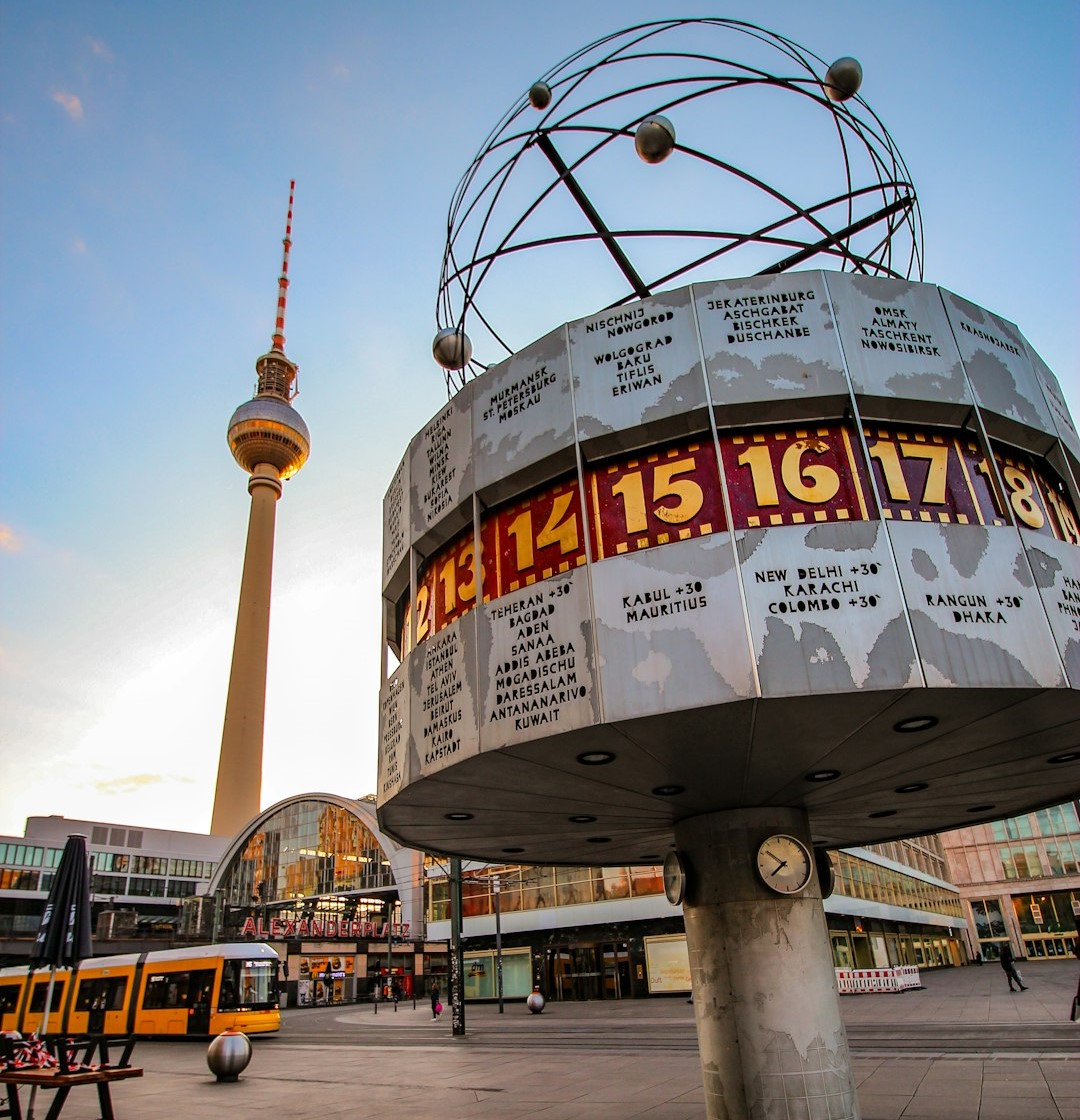
    The notion that Europe is shifting to the right, with nationalist and far-right parties gaining ground, is no longer merely an observation repeated only during election campaigns. From Germany to France, and from the Netherlands to Austria, we are seeing concrete electoral results reflecting this trend in many countries. The rise of the AfD in Germany is one of the most visible examples of this trend. However, the results from Berlin appear, at first glance, to present a contradiction: Whilst the right is gaining ground in many regions of Germany, in the country’s capital Die Linke came first, and Elif Eralp – the daughter of a family that migrated from Turkey to Germany for political reasons – has emerged as one of the strongest candidates for the city’s administration. Whilst Die Linke came first in Berlin with 25.7 per cent, the AfD also reached 16.3 per cent; in other words, the election demonstrated not only the rise of the left but also the fragmentation of the traditional political centre.

    It is easy, but insufficient, to explain this picture simply by saying ‘Berlin is left-wing’. For the changes taking place in Berlin bear the hallmarks of a deeper political polarisation emerging in capitalist societies today. The same economic and social crisis, the same cost of living, the same sense of a lack of future prospects and the same problem of political representation can drive people towards the radical right in one place and towards the left in another. Consequently, the fundamental question facing us is not merely why people are becoming radicalised, but under what conditions they are radicalising and in which direction.

    The Berlin election is instructive in this respect. One of the issues most frequently raised by voters was that of housing and rent. Surveys showed that 53 per cent of Berliners identified the housing market and rents as one of the most important political issues. Die Linke has also become the party in which voters place the greatest trust when it comes to finding solutions in this area. The issue here was not an abstract debate about socialism. There was a problem that directly affected people’s everyday lives: How will I pay the rent? Will I be able to continue living in this city? Will my child be able to find a home here? Why is the cost of housing constantly rising when my income isn’t increasing?

    Major political transformations sometimes arise precisely from such seemingly ordinary questions. Because rent is not just rent. It determines how much of your wages you keep, which neighbourhood you can live in, how far you have to travel to work, which school your children will attend, whether you can start a family, and ultimately, whether you can stay in the city. In other words, the housing problem is increasingly becoming a class issue in the modern metropolis.

    In the political conflicts of classical industrial capitalism, the factory occupied a central position. The production floor was where the relationship between worker and capital owner was most visible. It would be wrong to think that this relationship has disappeared in today’s major cities; however, the areas where exploitation and inequality are felt have multiplied. The wage earner navigates life not only through workplace relationships but also as a tenant facing a landlord, a consumer facing an energy company, a debtor facing a bank, and a passenger facing the transport system. When a significant portion of a pay rise is eroded by a rent increase, the housing market can become another arena for the struggle over wages.

    For this reason, the policy pursued by Die Linke in Berlin regarding large housing companies and high rents should not be viewed merely as an ideological discourse. It provides a political explanation for a material contradiction within the city. The AfD, on the other hand, attributes a significant portion of economic and social insecurity to migration, borders, security and national identity. The same person’s experience of the high cost of living can be attributed to two different causes by two distinct political narratives. In one, the problem is sought in the distribution of wealth and property; in the other, migration and cultural change are emphasised.

    This distinction also shows why the phrase ‘the public is becoming more right-wing’, which has been used frequently in recent years, is inadequate. The public is not a homogeneous whole. The economic reality experienced by a young healthcare worker living in rented accommodation in Berlin is not the same as that experienced by a fifty-year-old worker in a small, depopulating town in eastern Germany. Both may be anxious about the future, both may believe that the current system does not protect them, and both may be drifting away from the traditional parties; yet the political language into which this dissatisfaction is channelled need not be the same.

    It is precisely for this reason that it is not surprising that very different election results can emerge almost simultaneously across Germany. Whilst Die Linke came first in Berlin, the AfD achieved a very strong result in Mecklenburg-Vorpommern, demonstrating that distinct social landscapes exist even within a single Germany. In this context, viewing the political map solely through the prism of ‘right’ and ‘left’ colours is insufficient to understand the issue. We must also recognise the differences between the metropolis and the periphery, growing cities and shrinking towns, tenants and property owners, the young and the old, those with security and those without, and those who benefit from the global economy and those who feel left out of it.

    Another aspect that makes Berlin interesting is that this development is not unique to Germany. On the other side of the Atlantic, in New York, Zohran Mamdani took office as mayor at the start of 2026. The campaign of Mamdani, who describes himself as a democratic socialist, also centred on everyday economic issues such as the cost of living, rent, public transport and childcare. This similarity does not mean that Berlin and New York share the same political structure. The party systems of the United States and Germany are very different. Nor do Mamdani and Die Linke share the same historical and organisational traditions. Nevertheless, it is striking to note the issues around which politics in both cities has centred.

    In Washington, Janeese Lewis George’s victory in the 2026 Democratic Party mayoral primary has further fuelled this debate. Lewis George has not yet been elected mayor in the general election; however, her campaign – backed by the Democratic Socialists – centred once again on the cost of living, workers’ rights, childcare and housing. Similarly, in the US, Seattle Mayor Katie Wilson is also a figure linked to the democratic socialist movement. The American press is debating whether these developments in New York, Washington and Seattle signal a new wave of left-wing politics emerging in major cities. However, it cannot yet be said that this is a homogeneous movement that has spread across the entire country.

    In Europe, meanwhile, the Austrian city of Graz has long stood as a distinct example. The mayoralty of Elke Kahr, a member of the KPÖ, is rooted in a local political tradition shaped particularly by housing and social welfare policies. When we consider these examples side by side, we cannot say that there is a single organisational centre or a shared ideological programme linking Berlin, New York, Washington, Seattle and Graz. Indeed, such a claim would oversimplify the reality. However, it is worth reflecting on how similar social problems in these independent cities are giving rise to similar political demands.

    In my view, this is where the key point to note emerges: perhaps the fundamental political movement of our era is not merely the ‘rise of the right’. It is also the erosion of the centre that has long underpinned politics in Europe and North America. A significant proportion of the population believes that traditional centre-right and centre-left parties are unable to provide answers to current problems. Which political force will fill this void, however, depends on social and local conditions.

    From this perspective, the rise of the radical right and the emergence of the new urban left may not be entirely independent processes. Both may be fuelled by dissatisfaction with the existing order; however, they interpret this dissatisfaction in entirely different ways. Whilst a significant proportion of right-wing populist movements attribute the cause of their losses to outsiders, immigration, globalisation, liberal cultural change or the political elite; left-wing movements focus on economic inequality, wage suppression, the commodification of housing, the erosion of public services and the concentration of wealth. The political struggle arises precisely at this point: namely, over which cause to attribute the real hardships people are experiencing.

    The hardships people face are not imaginary. Rising rents are a reality. Wages eroding in the face of the cost of living is a reality. Uncertainty about the future is a reality. The inadequacy of public services is a reality. The loss experienced by deindustrialised regions is also a reality. However, the fact that a material problem is real does not mean that its political explanation will automatically point in a single direction. This is precisely where the power of politics lies: in attributing different causes, identifying different parties responsible, and proposing different solutions to the same social reality.

    For this reason, the result in Berlin does not indicate that the AfD’s rise in Germany has come to an end. On the contrary, the AfD also secured a significant share of the vote in the Berlin election. Similarly, Mamdani’s victory in New York does not mean that the United States is shifting to the left. The success of democratic socialists in a few major cities is not proof that capitalism has entered a new socialist era. It would be premature to draw such general conclusions from these results.

    However, viewing these developments as insignificant local exceptions could also lead to another misconception. This is because major cities are becoming the areas where the contradictions of capitalism are felt most acutely. Whilst capital, property, finance, technology and high incomes are concentrating in these very cities, the millions of wage earners who keep these cities running are facing an increasingly heavy burden of housing and living costs. The fact that, as a city grows economically richer, the people living there feel increasingly impoverished is one of the key contradictions of contemporary capitalism.

    If a nurse, teacher, waiter, courier, cleaner or young academic can no longer afford to live in the centre of the city where they work, this is not merely a housing issue. It is a matter of the very people who sustain the city’s production and daily life being pushed out of the city. For this reason, the concept of the ‘right to the city’ is regaining political significance. Who will be able to live in this city? Who will decide? Is the city a commodity to be invested in, or is it a shared living space for its inhabitants? Is housing an investment vehicle, or a basic necessity?

    The return of these questions to the political arena may also signify the return of the class issue in a different form. For class is not merely a matter of one’s position in the factory. How income is earned as well as how it is spent, one’s position within property relations, and who bears the cost of economic crises are all part of class relations.

    However, there is no automatic formula for success from a left-wing perspective either. It is not possible to generalise election results achieved in major cities to the whole of society. A narrative that is effective in city centres may not resonate in the same way in a deindustrialised region or a rural area experiencing population decline. If left-wing politics is viewed solely as the politics of the educated, young and metropolitan population, it risks ceding a section of the broader working class to right-wing populism. Similarly, explaining the rise of the right solely in terms of ‘ignorance’, ‘racism’ or cultural reactionary tendencies may render the economic and social foundations invisible.

    Perhaps the question that needs to be asked anew today is this: What are people angry about?

    Without an answer to this question, election results remain nothing more than percentages.

    If a worker fears losing their job, if a young person believes they will never be able to own a home in their lifetime, if a pensioner struggles to pay their rent, if someone living in a small town sees their hospital, railway line or school close down, or if a migrant worker, despite doing the same job, cannot feel like an equal member of society, then there is a problem that appears different in each case but converges on a common ground: a significant proportion of people feel they have lost control over their lives.

    Who will politicise this feeling has become one of the fundamental struggles of our age.

    On the one hand, there is a political narrative that says, ‘Your lives are getting worse because the borders are open, immigration is too high, and the elites running your country have forgotten you’. On the other hand, another narrative is emerging which states: ‘Your lives are getting worse because income and wealth are being distributed ever more unequally, housing and basic needs are left to the mercy of the market, and workers’ economic power is waning.’

    This is precisely where Berlin’s significance may lie.

    Berlin is not telling us that Europe has now turned to the left.

    New York does not tell us that America has become socialist.

    Nor does the rise of the AfD prove that the entire working class has shifted to the right.

    Together, these developments point to something more complex: the old political centre is no longer able to hold people together as it once did.

    And as the centre weakens, the anger building up beneath society flows in different directions.

    In one place, it turns into anger directed at migrants; in another, against large property companies.

    In one place, it takes the form of demands for borders; in another, demands for rent caps.

    In one place, it becomes a call to protect national identity; in another, a debate over public ownership.

    For this reason, the question ‘Is the right on the rise, or the left?’ may not, on its own, be sufficient to understand the period ahead. The more important question is this:

    In this new era of insecurity created by capitalism, into what political language will people’s anger be translated?

    The Berlin elections do not yet provide the answer to this question.

    But they are a strong indication that the question can no longer be postponed.

  • Who Owns Tibet? Seyhan Uludag

    Who Owns Tibet? Seyhan Uludag

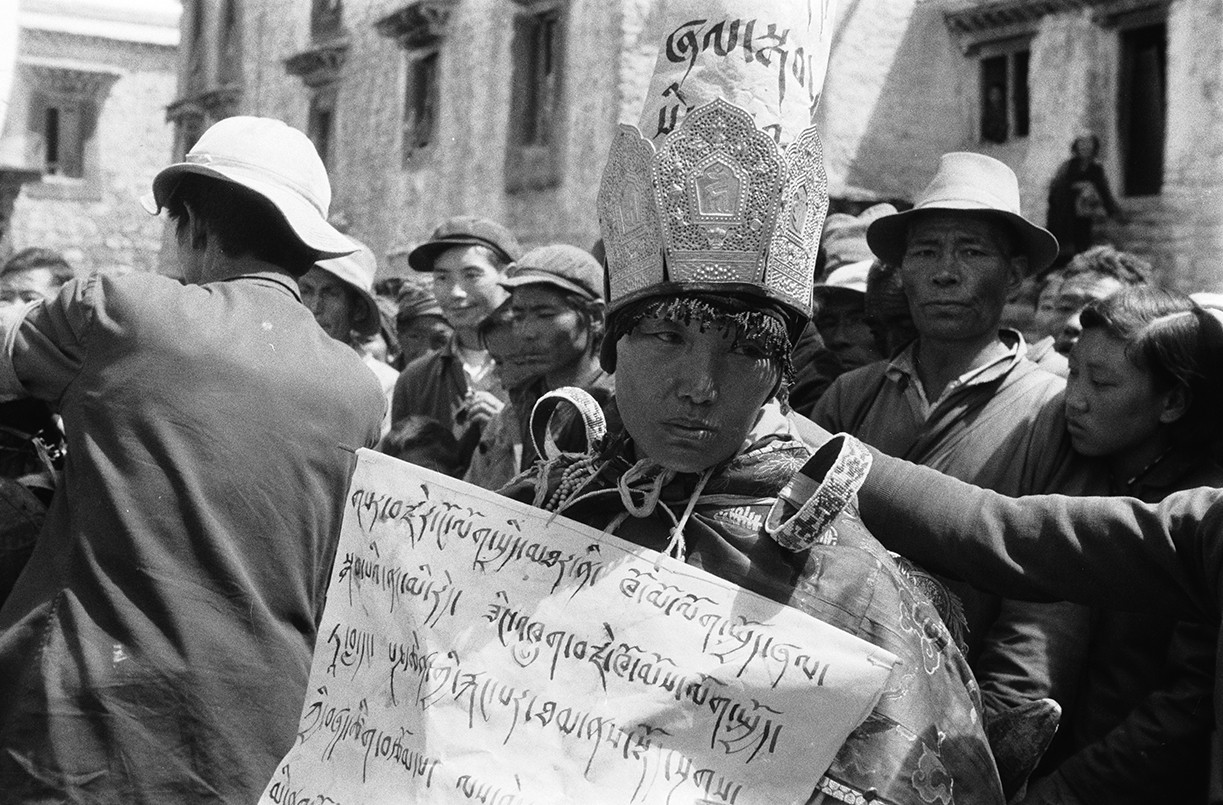
    The moment we begin to discuss Tibet, we are confronted with two opposing historical narratives. In the first narrative, Tibet is a country that has been occupied by China, its culture and political autonomy suppressed. In the second narrative, however, pre-modern Tibet is a theocratic-feudal society dominated by the Dalai Lama, the great monasteries and aristocratic families, and the Chinese Revolution liberated the Tibetan working class from this system. However, it would be a grave mistake to assume that these two narratives are entirely mutually exclusive. It is possible that old Tibet was characterised by severe class inequalities; at the same time, it is also possible that the Tibetan people possessed the right to determine their own political future. Indeed, from a Marxist perspective, the crux of the matter lies precisely here. For a people’s right to self-determination is not a reward granted because that people had previously established a democratic, secular or socialist society. It is a political right. Criticising Tibet’s former social structure is one thing; deeming it legitimate for Beijing to decide Tibet’s future is quite another. The moment we confuse these two, we end up conflating class struggle with state sovereignty, socialism with the interests of the central state, and internationalism with the politics of a great power.

    To speak of Tibet’s freedom, we are not obliged to portray old Tibet as a Buddhist paradise; on the contrary, we must not do so. The work of the historian Melvyn Goldstein on traditional Tibetan society shows that it was an extremely hierarchical society. Goldstein demonstrates that the vast majority of the lay population were bound by hereditary relationships of dependency to aristocratic or monastic estates; yet he also highlights that there was a certain degree of social mobility within this system. Although there is debate amongst historians as to how this structure should be labelled, there is a solid historical basis for the view that ancient Tibet was not an egalitarian society. Consequently, there is no reason to reject socialist criticism of the ancient Tibetan order. The Dalai Lama’s religious and political authority may be criticised; aristocratic privileges may be criticised; the economic power of the major monasteries may be criticised; relationships of dependence on the land and the lord may be criticised; and the tax and labour obligations imposed on the peasantry may be criticised. It is, of course, inconceivable for a Marxist to defend these things.

    However, this leads to an entirely different conclusion: ‘Old Tibet was reactionary; therefore, China’s establishment of sovereignty over Tibet was historically progressive.’ This is the proposition that must be debated. For the moment we accept this logic, the backwardness of a society becomes the source of legitimacy for another state’s intervention in that society. This cannot be applied solely to Tibet. The same logic can be applied throughout the entire history of colonialism. Colonial states also built roads, laid railways, established centralised administrations, eliminated local aristocracies in some places, and opened modern educational institutions. But Marxism does not judge colonialism by the number of kilometres of railway built. The fundamental question is this: Is a people the subject of its own social transformation, or does another state claim the authority to make decisions on that people’s behalf?

    This is the crux of the Tibetan issue. Why must the liberation of the Tibetan peasant from the aristocracy necessarily be the same as Tibet’s political subordination to Beijing? Why should the liberation of the Tibetan worker from the monastic aristocracy mean relinquishing their own political will? Class liberation and national liberation are not mutually exclusive. A people can simultaneously oppose both their own ruling class and an external power that decides their fate on their behalf. From a Marxist perspective, the revolutionary subject is the people themselves; it is not the army of another state. Therefore, the correct question is not ‘Was old Tibet progressive?’. The correct question is: Does the Tibetan people have the right to be the subject of their own social and political future?

    Here, we must also avoid another oversimplification regarding China. It is incorrect to assess today’s China under the same social system as that of the 1949 Chinese Revolution, as if no changes had taken place. The Chinese Revolution was a historical turning point. Particularly from the mid-1950s onwards, the scope of private capital was significantly curtailed, large industrial enterprises were nationalised, banking and foreign trade were centralised, agriculture was collectivised, and the economy was integrated into a system of central planning. The political system of the Mao era, the role of the bureaucracy and the limits of workers’ democracy are open to criticism. However, it is clear that the fundamental economic orientation of the period was not the expansion of private capital, but the restriction and elimination of capitalist property relations. After 1978, however, a different historical process began. Market mechanisms expanded, private capital once again became a major economic force, foreign capital flowed into the Chinese economy in large quantities, and profit, competition and capital accumulation became increasingly decisive factors in economic life. To explain today’s China as a mere continuation of the economic relations of the Mao era would be to ignore this transformation.

    One of the strongest arguments for claiming that today’s China is socialist is the size of the state sector. Indeed, the Chinese state is extremely powerful in strategic sectors of the economy. However, from a Marxist perspective, state ownership is not the same as socialism. The fact that a factory is state-owned rather than privately owned by a capitalist represents a significant change in ownership. However, it does not automatically follow that the factory is now under the democratic control of the workers. Marxist analysis must look not at title deeds, but at social relations. Who makes the decisions on production? Who appoints the managers of the enterprise? Who decides how the surplus product is to be used? Can workers elect and dismiss their managers? Can workers establish independent class organisations? Is the aim of production to meet social needs, or is it to ensure the enterprise’s competitive strength, growth and capital accumulation? These questions determine whether state ownership is socialist or not. State ownership can be a means of socialist transformation. However, state ownership in itself is not socialism.

    It is particularly instructive to examine the Chinese state’s own documents in this regard. On the one hand, the Chinese Constitution defines public ownership as the foundation of the socialist economic system and states that the state sector plays a leading role in the economy. However, the same constitution also explicitly acknowledges that various forms of ownership develop alongside public ownership. More importantly, it defines private enterprises as ‘an important component of the socialist market economy’. It specifies that the rights of the private economic sector will be protected by the state and that their development will be encouraged. The same constitution also safeguards legal private property and the right to inheritance. This is no mere detail. For the issue is not simply a matter of a few small traders operating on the fringes of the socialist economy. Private capital is one of the legally recognised components of the current economic order. The Law on the Promotion of the Private Economy, adopted in 2025, has made this even clearer. The aim of the Act is to improve the environment for the development of the private economy, to ensure equal competition for private economic entities in the market, to support investment and financing, and to strengthen the role of the private economy in national development.

    The Marxist question is therefore inevitable: If private capital exists, it can employ wage labour, accumulate capital, generate profit, private property can be bequeathed, and the growth of this capital is legally encouraged by the state; by what material criterion can we claim that capitalist social relations have been abolished? The Chinese state’s response to this is the theory of the ‘first stage of socialism’ and ‘socialism with Chinese characteristics’. This is the political and theoretical thesis of the Chinese Communist Party. However, the task of Marxist criticism is not to repeat the name a state gives itself; it is to examine the relations of production.

    An even more fundamental question is this: is the working class truly in power in China? A party defining itself as the representative of the working class is not the same as the working class actually being in power. If we say that a class is in power, we must be able to demonstrate the material forms of this. Where is the workers’ actual control over production? Where is the workers’ capacity for independent political organisation? Where is the mechanism within enterprises for electing and recalling managers from below? Where is the working class’s direct decision-making mechanism regarding how the economic surplus is to be used? Class power in the Marxist sense cannot be demonstrated by the existence of a state apparatus acting ‘on behalf of the people’. For representation is not the same as sovereignty. A state may claim to be governed on behalf of the workers. However, this does not imply that the workers actually govern the state. Consequently, the following question must lie at the heart of any discussion regarding present-day China: Does the state control capital, or does the working class genuinely control the production process and the state? These are two entirely different matters.

    However, we are now coming to a far more important point. Let us suppose that all the above criticisms are wrong. Let us suppose that today’s China is accepted as a fully socialist society. In that case, does the Tibetan people’s right to self-determination cease to exist? According to the Leninist theory of the national question, the answer is still no. This is because the right of nations to self-determination is not merely a temporary right granted to peoples living under the domination of capitalist states. Lenin explicitly linked self-determination to a nation’s right to separate politically from another national-political structure and to establish an independent state. More importantly, he argued that socialists must defend voluntary ties, not compulsory ones. He did not argue that every nation must necessarily secede; however, he insisted on the recognition of a nation’s right to secede. This distinction is of the utmost importance: defending the right to secession is not the same as defending secession in every circumstance. True unity can only be voluntary where the freedom to secede exists. If a people are presented solely with the option of ‘you can remain united’, it becomes difficult to speak of self-determination in that context.

    When we strip the Tibet debate of all its layers of propaganda, what remains is an extremely simple yet fundamental question: who should decide Tibet’s future? Beijing? Washington? Delhi? The Dalai Lama? Another state? Or the Tibetan people themselves? From the perspective of the Leninist principle of self-determination, the answer is not to select a specific final status from outside. It could be independence, a federal structure, broad political autonomy, remaining within China, or some other political arrangement. The moment an external decision is made as to which of these is correct, the very principle of self-determination ceases to exist. The essence of the principle is this: the Tibetan people must be able to freely discuss all political options, including independence, and determine their own future without coercion. This idea is not found solely in Leninist theory. The United Nations General Assembly’s Resolution 1723 on Tibet, dated 20 December 1961, also explicitly referred to the Tibetan people’s right to self-determination. This resolution was not a binding declaration of independence that resolved Tibet’s legal status on its own; however, it is an important historical document showing that the issue of self-determination regarding Tibet was explicitly raised at the international level.

    Let us now return to the initial discussion. Old Tibet was reactionary. There were vast class inequalities. There was an aristocracy. There was a religious hierarchy. Vast sections of the peasantry were caught up in relations of dependency. To state these facts is not to be against the Tibetan people; on the contrary, it is to be honest with history. However, with precisely the same honesty, we must ask the following question: Does the fact that a people were poorly governed in the past deprive them of the right to determine their own future? If the answer is yes, then very few peoples in the world would be entitled to self-determination. For which society in history has been free from exploitation? Which people’s past has been free of aristocracy, class oppression, religious domination or despotism? Linking rights to the nature of past regimes amounts to holding peoples accountable for the crimes of their own rulers. A Marxist approach cannot accept this. The Tibetan people’s right does not stem from whether the Dalai Lama is progressive or not. The Tibetan people’s right does not stem from whether Buddhism is progressive or not. The Tibetan people’s right does not stem from the class structure of old Tibet. The right stems from the people being a political subject.

    Another problem arises here from a left-wing perspective. The existence of the geopolitical struggle waged by the US against China does not mean that every criticism directed at China serves American imperialism. Similarly, the possibility that Washington might exploit the Tibetan issue for its own interests does not negate the rights of the Tibetan people. Anti-imperialism does not mean defending every policy of every state that is a rival to the United States. Such an understanding shifts socialism from the people to the states. Yet the subject of Marxist internationalism is not states, but workers and peoples. The fact that one great power stands against another does not automatically make it socialist or progressive. Similarly, the fact that a people’s demand is supported by Washington does not automatically render that demand illegitimate. The nature of a right cannot be determined by which major state seeks to instrumentalise it.

    This is perhaps the most important lesson the Tibet debate has taught us. If we equate socialism with the geopolitical interests of a state, we lose sight of the essence of socialism. Socialism is not a state flag, nor is it the name of a party; it is not a revolution carried out in the past, nor is it the size of state-owned enterprises, nor the state’s capacity to regulate capital. From a Marxist perspective, socialism is the claim that producers become the true agents of their own social life. The same principle applies to the national question. The freedom of a people does not lie in another state making decisions on their behalf. Nor is it emancipation when a central state declares, ‘We are governing you for your own good’. Just as the fact that the Tibetan peasant’s master was an aristocrat in old Tibet is subject to criticism, so too must the determination of the Tibetan people’s political destiny by another central authority be questioned with the same theoretical courage. For socialism is not merely a change of masters. Liberation is the people becoming the subjects of their own lives.

    When viewed from a Marxist perspective, the most consistent conclusion that can be defended regarding the Tibetan question is not to declare a single, externally determined final status for Tibet. The real issue is the right to choose. It is possible for Tibetans to choose to live within China. It is possible for them to opt for independence. It is possible for them to demand a federal or other political system. However, a genuine choice exists only when all options are truly possible. This is where the fundamental strength of Lenin’s theory of self-determination lies. The separation of a people is not compulsory; but if the right to secede does not exist, unity is not voluntary. For this reason, the fundamental Marxist question in the Tibet debate is neither the Dalai Lama, nor Buddhism, nor the ‘socialist’ label bestowed upon the Chinese state. The fundamental question is this: Will a people be the subject of their own future, or will they not? Condemning the aristocracy of old Tibet does not eliminate this question. Recognising the historical achievements of the Chinese Revolution does not eliminate this question. Acknowledging the socialist transformations of the Mao era does not eliminate this question. Nor do the economic successes of present-day China eliminate this question. For the right of peoples to self-determination is not a right to be relinquished in exchange for economic development. And the test of socialism must be measured not only by what it does to capital, but also by the extent to which it allows the peoples under its rule to have a say in their own futures.

  • Political Alevism – Can Serhat Halis

    Political Alevism

  • A FRIENDLY VOICE IN THE SKETCHBOOK – Süleyman Kuş

    A FRIENDLY VOICE IN THE SKETCHBOOK – Süleyman Kuş

    For people forced to live far from their own language, culture and the tapestry of peoples, to hear a friendly voice, to listen to folk songs and melodies, to experience a work of art crafted with care; interacting with artists and cultural workers who create ‘with clear eyes’ in this age of delusion and lies – in short, cultural reproduction – is a vital necessity to ensure we do not fade into oblivion.

    Some of our people, striving to support this creative endeavour from their own perspective, are producing whatever they can, bit by bit; they are launching YouTube channels and attempting to reach political exiles, refugees and conscientious migrants via internet television.

    The Journey of ‘Karalama Defteri’

    Since May 2020, Hasan Bulut has been attracting attention as a political exile who is constantly developing himself in this field and embraces a broad perspective extending from regionalism to universality, through his culture and arts programme titled ‘Karalama Defteri’.

    His journey, which began within Mardef — the Federation of Maraş Cultural Associations — with the aim of promoting the cultural and artistic values of this region, has since been enriched by a perspective that embraces all the progressive and revolutionary values of our region.

    To introduce these values to our people, to stand up against the system’s predatory and reactionary culture of occupation; and to turn towards revolutionary, socialist values in opposition to cultural assimilation and modern acculturation carried out under the guise of ‘integration’—the organisation has been running its programme with great dedication for approximately 125 weeks, save for a few exceptions.

    Whilst, like each of us, it grapples with the daily struggles of life, it also prepares for a new guest every week; reviewing books and producing the programme’s posters and visuals. When broadcast day arrives, without any assistants, they act as both presenter and technical manager, striving to produce a high-quality programme in a rather cramped space with inadequate technical equipment.

    Viewers can also interact with the guest in writing during the programmes.

    A cultural memory and archive

    One of the key features of *Karalama Defteri* is that, through its ‘conversations’ lasting approximately two hours, it is progressing towards becoming a comprehensive archive—both locally and generally—of the country and the diaspora; thereby bringing important cultural values back into the collective memory.

    In line with a revolutionary cultural broadcasting policy, talented artists who have been ignored, suppressed or rendered invisible by the system – rather than the names imposed by popular culture – are being brought to the fore; support is being given to ensure their work reaches the public.

    We wanted to host our dear Hasan on this occasion and introduce the efforts he has been pursuing for years.

    His autobiography, as expressed in *Karalama Defteri*, can be summarised as follows:

    A life stretching from Elbistan to exile

    Born on New Year’s Day in the Elbistan district of Maraş as the eldest son of a poor Turkish Alevi family with two children; however, he is registered in the population records as having been born on 5 June 1968.

    He experienced internal displacement at a young age. His family travelled to İskenderun on a tanker, setting off with nothing but a single bed and a few pots and pans. He completed his primary, secondary and sixth-form education there.

    Due to his political activities and periods of detention, he was unable to continue his education. He worked in a variety of jobs. He later began working as a labourer for İskenderun Municipality.

    He held a managerial position at the DİSK Genel-İş Trade Union. Despite being a trade unionist, he was dismissed from his job along with his colleagues due to his involvement in disputes during the collective bargaining process, work stoppages and a hunger strike.

    He was arrested in 1996. After his release from prison, as the political pressure showed no sign of abating, his life—which had previously been characterised by internal migration—was now compounded by emigration, and he left the country in 1999.

    He continued his political, social and cultural work whilst abroad.

    Today, he continues to broadcast via Mardef TV and the ‘Karalama Defteri’ YouTube channel, whilst also pursuing photography as an art form.

  • Socialist outlook and political practice

    Socialist outlook and political practice

    Franziska Stier

    Anyone who wants to organise hope needs a political approach that brings people together. BastA! was founded as a party with the character of a social movement. The aim was to create a ‘middle ground’ between parliament and the movement, which still holds true today.

    BastA! is not a party run by a select few – although it sometimes feels that way, as too much work ends up falling on too few people. Our understanding of socialism also means advocating for radical democracy, which is based on self-determination, international solidarity and people’s active involvement in shaping history. Rosa Luxemburg had already set these ideas down on paper in the Spartacus League’s programme under the title ‘What Does the Spartacus League Want?’, thereby getting on the nerves of more than a few socialist leaders: ‘The essence of socialist society lies in the fact that the great working masses cease to be a governed mass, but rather live the whole of political and economic life themselves and direct it through conscious, free self-determination.’

    Pessimism of the intellect, optimism of the will

    The Italian communist Antonio Gramsci, too, grappled with the question of attitude and called for a ruthless analysis of the balance of power, coupled with an unwavering belief in the possibility of change through collective action. We know from him that domination is established not only through coercion but also through hegemony – that is, culture, education and the media – and that it is the task of socialist parties to build counter-hegemony. Socialism is thus not merely a political goal, but also a cultural practice. Socialism is not merely an act of seizing power, but a protracted process of transforming society.

    Organising the socialist-feminist current of warmth

    It is not enough simply to be against capitalism, patriarchy and ecological exploitation. Rather, we must organise spaces in which we can shape everyday life together with others. One space where decisions are made about people’s everyday lives is parliament. Yet here, people appear merely as ‘political objects’ upon whom decisions are imposed.

    Given the current balance of power, the bourgeoisie can be forced to make the odd compromise, but no major breakthroughs have been achieved. BastA! was successful where we had broad social movements behind us and where people organised themselves in neighbourhoods to resist.

    These movements require time, energy and money. They do not last long, because everyday life, the standard 42-hour working week and childcare demand too much energy to remain healthily committed both simultaneously and in the long term. Yet even a short-term collective experience of fighting together changes us – be it in the feminist strike movements or in other transformative struggles such as the climate justice movement around Basel2030.

    Moving forward by asking questions

    The experiences of the door-to-door conversations with Basel2030 were striking. People expressed their gratitude because no one had ever taken an interest in them before. Others, however, were overwhelmed by the fact that someone was asking serious questions about their situation and their needs. More often than not, left-wingers use a question as a starting point, only to go on to deliver a detailed analysis of imperialist or, alternatively, capitalist exploitation – a 10-minute monologue for which absolutely no one has the time or interest.

    But it is this genuine interest in the lives of our fellow human beings that defines us as socialists and that we must build on – without falling into the trap of lecturing.

    It must never be about us governing people. Instead, change must be organised together with the people. The challenge lies in bringing about personal change and social change hand in hand. Racism, misogyny, queerphobia, anti-Semitism, povertyphobia and ableism … these are all attitudes that are deeply ingrained in our society and do not stop at the ‘revolutionary subject’. And however much we reject it, we too contribute to oppression on a daily basis. But we do not break it down by retreating exclusively into theoretical circles. Of course, a clear stance and reflection are needed here too, but I am convinced that these divisions and forms of oppression can only be overcome through a shared struggle and a genuine interest in one another – by acting together in a #radicallyhuman way.

    Organising neighbourhoods – a political utopia?

    Through discussions with Turkish and Kurdish partner organisations, we have learnt just how diverse party life can be. Alongside thematic groups, the parties foster a wide range of cultural and sporting activities, which bind far more people to the party than politics itself. These spaces foster exchange and understanding.

    The socialist aim is to organise the shaping of life in neighbourhoods – not from above, but driven by the many, with BastA! right at the heart of it rather than merely on the sidelines. Perhaps with a tea house, a social advice centre or some other concrete focal point for the many.

    Perhaps the council-based democratic structures of ‘democratic confederalism’ also offer approaches to realising this concrete utopia. The strength of Abdullah Öcalan’s ideas lies not only in his views on women’s liberation and ecology, but also in the fact that people participate in the practical implementation of their decisions through councils. Through this very concrete participation, a collective appropriation of public space takes place, which counteracts alienation and isolation.

    I am convinced that BastA!, with a firm, clear and, despite everything, cheerful attitude, can contribute to a socialist society outside the context of political election cycles. Let’s get started!

    Franziska Stier
    , Party Secretary, BastA!

    Source / First published: BastA!, Socialist Stance and Political Practice, 8 June 2025.
    Original: https://basta-bs.ch/artikel/sozialistische-haltung-und-politische-praxis

  • The Identity Crisis in European Politics – Serdar Öztürk

    The Identity Crisis in European Politics – Serdar Öztürk

    Is it possible to explain the changes that have taken place in European politics in recent years simply by saying that ‘the far right is on the rise’? From Germany to France, from Italy to the Netherlands, and from Austria to Sweden, nationalist, populist and anti-immigration parties have gained a stronger foothold in many countries compared to the past. A significant transformation is taking place in Europe. Whilst right-wing parties are gaining strength, centre-right and even some centre-left parties are also placing issues long championed by the right at the heart of their own political discourse. The question that needs to be asked here is not “Is Europe turning to the right?”, but rather “Is Europe’s political centre shifting to the right?”.

    Although Giorgia Meloni’s Fratelli d’Italia in Italy, Marine Le Pen’s Rassemblement National in France, the AfD in Germany, the FPÖ in Austria, the PVV in the Netherlands’s PVV and VOX in Spain may appear similar, but they actually harbour significant differences from one another. The points they share, however, include limiting migration, strengthening national sovereignty, tightening security policies, preserving traditional social values and questioning the powers of the European Union…

    Since the wave of migration towards Europe in 2015, migration has moved beyond being merely a humanitarian issue to become one of the central themes of election campaigns. The social integration of refugees, border security, irregular migration and, in some European countries, rising crime and security concerns have become key issues influencing voters’ political choices. It is at this point that right-wing populist parties have offered simple and direct answers to the public’s concerns.

    What were the right-wing parties’ promises?

    Tighter borders, less migration and a stronger nation state.

    The response from centrist parties, however, was often more complex and cautious. It is precisely for this reason that right-wing parties gained a significant advantage by claiming to articulate voters’ everyday concerns more clearly than other parties.

    Is it correct to attribute the rise of the right in Europe solely to immigration? The answer is, of course, no…

    Economic and social unrest has increased in Europe in recent years. The cost of living, energy prices, housing costs, young people’s difficulties in finding work, and concerns about the future of the welfare state have fuelled dissatisfaction with traditional political parties. Add to this a decline in trust in political institutions, and the result is clear.

    Doesn’t the success of right-wing populist parties stem from their provision of simple answers to problems that appear complex, rather than the solutions long offered by centrist parties in response to these issues? Europe is increasingly debating the question: ‘What sort of society do we want to live in?’ Taking into account the influence of social media, we must also factor in the security concerns raised regarding the future of the European Union as a further driver of the rise of right-wing populist movements.

    The fundamental idea of the European Union is based on sharing national sovereignty in certain areas through common institutions. Yet nationalist right-wing parties often advocate for “stronger nation states and less interference from Brussels”.

    For this reason, the rise of the right in European politics is not merely a matter of immigration or the economy. It is also a debate about what kind of political structure Europe should have.

    However, it would be incorrect to view right-wing parties as a single bloc. Whilst some advocate a complete breakaway from the European Union, others wish to remain within the Union whilst demanding that powers be returned to the nation states. These differences could lead to significant conflicts regarding the future of the European right. There is another crucial point to bear in mind here.

    It is not correct to label every right-wing voter in Europe as a ‘far-right voter’. One voter may wish to restrict immigration but still defend democratic institutions. Another may want to see the European Union’s powers reduced but may not wish to abandon liberal democracy.

    It is therefore necessary to distinguish between the ‘right’ and the ‘far right’.

    However, the opposite mistake must not be made either. Not every party that comes to power through democratic elections can automatically be regarded as posing no risk to democratic values. The real issue here is whether fundamental principles such as the rule of law, the separation of powers, freedom of the press, minority rights, independent institutions and democratic competition are being upheld. For this reason, when assessing the rise of the right in Europe, one must look not only at parties’ economic or immigration policies, but also at their relationship with democratic institutions.

    To understand the rise of the right, it is also necessary to examine the problems faced by the European left.

    For many years, social democratic parties in Europe served as the primary political representatives of the working class. However, with the transformation of the economy, the decline of industry, globalisation and shifts in the electorate, the ties between these parties and their traditional supporters have weakened. It is particularly striking that a section of the working class, feeling economically insecure, has turned towards right-wing populist parties. This situation demonstrates that the classic political equation of ‘working class = left’ can no longer be relied upon in any country. Today’s voters may demand greater state support on economic issues whilst holding more conservative views on cultural matters. Alternatively, they may hold liberal economic views whilst supporting tough policies on immigration. Consequently, the old left-right divide has become increasingly complex.

    It would be incorrect to view the situation facing Europe as an inevitable process moving in a single political direction. Whilst there are countries where right-wing parties are on the rise, there are also those where they are in decline. Voter behaviour can vary depending on economic conditions, immigration figures, government performance and countries’ historical experiences. For this reason, it may be premature to say that “Europe has now turned completely to the right”.

    However, there is another reality: the agenda of European politics has also shifted.

    Migration, border security, national sovereignty, identity, security and cultural values are now at the heart of European politics. And for a long time, this agenda has been shaped by right-wing populist movements.

    Consequently, it is insufficient to interpret the political transformation in Europe solely through the lens of who wins and who loses at the ballot box. The real transformation becomes apparent in the questions politics asks and the answers it deems ‘normal’.

    Perhaps what is unfolding in Europe today is not, in the classical sense, a ‘march of the right to power’, but rather a harbinger of a deeper transformation. Right-wing parties may be the most visible actors in this transformation. The real struggle, however, will centre on who can address the electorate’s genuine economic, social and cultural concerns without compromising democratic values.

    Is Europe truly turning to the right, or is the political centre – which has been in power for years – disintegrating because it can no longer respond to the electorate’s changing world? The answer to this question will determine not only Europe’s political landscape but also the kind of society it wishes to be.

  • The Call of Decay – Seyhan Uludag

    The Call of Decay – Seyhan Uludag

    The history of humanity is often told as a story of progress and ascent; through inventions, victories, cities, civilisations and periods of splendour. But this history is also a history of decay. For behind every rise lies a hidden collapse; in the shadow of every era of splendour, decay begins. Rome’s marble palaces one day quietly turned to ruins; the modern cities of the 20th century were suddenly buried beneath the rubble of war. And today, at the pinnacle of modernity, we bear the traces of a silent decay within our own lives.

    Decay is not merely the fate of societies; human beings themselves decay. An inner collapse, the slow depletion of the soul, the distance a person places between themselves and their own existence… These can be seen even on the face of an ordinary person passing by on the street. For example, an individual living in a society where justice has ceased to be a value and has become a game played in the shadow of self-interest begins to decay by making small concessions. They witness injustice at work but remain silent; they learn to conform by stifling the voice of their conscience. After a while, this silence becomes part of their personality. The person finds justifications for their own moral decline by telling themselves, ‘There’s no other way to live.’

    Another facet of this decay is the individual’s loss of authenticity. The type of person who presents themselves on social media as someone they are not, sharing fake happiness and fake laughter, whilst striving to appear ‘successful’ to others despite being deeply unhappy inside… This is not merely an individual weakness, but a sign of the spirit of the age. For now, appearance holds far greater value than truth; the human inner world has been dissolved in the market’s false shop windows.

    At times, decay is far more silent and invisible. It emerges when a person begins to disconnect from their own body, their nature, and their emotions. A young person gives up on their own dreams because they are constantly forced to work and are always expected to deliver more ‘performance’; another person abandons their friends for the sake of petty gains; yet another refrains from speaking the truth out of fear. And all these small acts of surrender accumulate, eventually turning into a person’s alienation from themselves. This is what personal decay is: a person no longer remembers what they once knew to be true, suppresses the voice of their heart, and becomes a stranger even to themselves.

    The late stage of capitalism has turned these instances of personal decay into a collective fate. We live in an age where consumption knows no bounds and everything is transformed into a commodity; even human beings are now a product. Their labour, time, bodies, and even their emotions are thrown onto the market. The ‘happiness packages’ sold in adverts do not fill people’s spiritual voids; they merely create a new form of addiction. The political arena is a space not of truth, but of manipulation; the institutionalisation of lies no longer comes as a surprise to people. The bond we have forged with nature, meanwhile, is on the brink of being severed; even as forests burn, glaciers melt and it becomes harder to breathe in our cities, the average person has learnt to turn a blind eye. It is precisely this indifference that is the sign of the deepest decay: when a person has become so numb as to simply watch their own demise, decay transcends individual boundaries and becomes a societal phenomenon.

    The aim of this essay is to address decay not merely as a complaint or a simple concept, but as a theoretical problem. Nietzsche’s concept of decadence, Marx’s theory of alienation, Adorno and Horkheimer’s critique of modern barbarism, and today’s ecological crises all point to the same question: Is humanity consuming itself by consuming the values it has created? For decay is not merely destruction coming from without, but a dissolution that begins from within. It is humanity’s betrayal of itself; the journey of the individual, which began with small concessions, ultimately transforming into collective barbarism.

    Yet within every decay lies a possibility. Sometimes, new life sprouts from within a decaying body; a spark in the midst of darkness, a desire for rebirth within a soul that has hit rock bottom… If we view today’s decay as an inevitable fate, barbarism will be inevitable; but if we can interpret it as a call, a warning, a cry, perhaps there is still a chance for humanity to rebuild itself.

    The Concept of Decadence: Philosophical Foundations

    The word ‘decadence’ is often used merely to describe cultural decay, the corruption of art, or the erosion of moral values. Yet at the root of the concept lies a far deeper philosophical debate. Decay is the fate not only of societies but also of individuals; and this fate becomes apparent the moment the relationship between a person and their own self is disrupted.

    Nietzsche’s understanding of decadence is perhaps the most striking starting point for this issue. According to Nietzsche, decadence signifies the loss of life’s vitality, the exhaustion of existence’s inner energy. When a person loses the creative force within themselves, and begins to flee from life rather than affirm it, they decay. That is why Nietzsche regards Christian morality as a ‘morality of decadence’: it is the weak, by denying life, exalting weakness as if it were a virtue. In his view, decadence is not merely a moral decline, but a state of denying existence itself.

    It is not difficult to see this idea on an individual level. When a person feels powerless in the face of life, when they suppress their own passion or give up on being courageous, they are drawn into decadence. For example, consider a person who wanted to be a painter as a child but became an accountant to meet their family’s expectations. Over time, they begin to forget the passion within them, and a mundane conformity takes its place. The moment they abandon their own dream, their own unique desire for life, the first step towards decay has in fact been taken. In Nietzsche’s view, this is an individual’s ‘rejection of life’; that is, the most personal form of decadence.

    Oswald Spengler’s book *The Decline of the West* interprets the concept of decadence on the scale of civilisations. According to him, every civilisation is born, develops and eventually decays and dies, just like a living organism. Spengler argues that Western civilisation, too, has entered this phase of decay. The mechanisation of cities, the superficialisation of culture, technical advances that consume the human spirit… In his view, these are the signs of a civilisation’s transition from splendour to decay. Today, it is not difficult to see the echoes of this diagnosis in the crowded loneliness of megacities, in the people who are being drained beneath the neon lights.

    Marx, on the other hand, explains decay through the relationship that humans establish with their own labour. The theory of alienation reveals the social roots of decadence. When a person transforms the product of their own labour into a commodity, they become alienated from that product; over time, their labour turns into a foreign power over themselves. This is not merely an economic process, but also a spiritual decay. For example, a worker who spends the whole day producing the same part in a factory eventually ceases to be producing the fruit of their own labour, but rather a part of a process alien to them. And this cycle severes the individual from their very essence. According to Marx, the decadence of capitalist society lies precisely in the universalisation of this alienation.

    Adorno and Horkheimer, however, discuss decadence on a different plane in *The Dialectic of Enlightenment*: in their view, modern reason has transformed itself into barbarism. Rather than liberating humanity, science and rationality have created a new form of domination. The industrial death camps of Auschwitz, as the darkest product of modern reason, have laid bare the most horrific face of decadence. Here, decay is not merely the decay of the individual or society, but the decay of the very reason of an entire civilisation.

    These philosophical foundations highlight the different dimensions of decay: for Nietzsche, the rejection of life; for Spengler, the decline of civilisation; for Marx, alienation; and for Adorno, the transformation of reason into barbarism. The common thread is clear: decadence is humanity’s alienation from itself, from its own creative power, and from its own truth.

    People today should not regard these theories as alien concepts; for traces of each are very much alive in our daily lives. Nietzsche’s decadence is evident in an individual who has lost their imagination and is trapped in routine; Spengler’s collapse of civilisation is evident in a community whose spirit is withering away amidst the concrete walls of the city; Marx’s theory in a worker who receives no reward for their labour and has become alienated from their own life; and Adorno’s critique of barbarism in masses living under the control of algorithms and addicted to screens.

    Decadence, for this very reason, is not merely a theoretical concept, but the inner mirror of our age. And the face we see in this mirror is becoming increasingly familiar.

    The Dialectic of the Enlightenment and Modern Barbarism

    1. The Enlightenment thinkers of the century believed that by breaking the chains of human reason, they would usher in an age of freedom, equality and progress. Reason, science and technology would grant humanity supremacy over nature; superstition would be replaced by knowledge, and despotism by freedom. Humanity would finally become its own master. Yet historical experience has shown that, whilst some of these hopes were realised, the same process also brought with it an unexpected and terrifying contradiction: the transformation of reason into barbarism.

    Adorno and Horkheimer sharply articulate this paradox in *The Dialectic of the Enlightenment*. According to them, the Enlightenment aimed to liberate humanity by making nature the object of reason; yet, in the process, the domination established over nature created a new form of domination over humanity. Reason became not an instrument of freedom, but rather a tool of calculation, control and oppression. Humanity has become a prisoner of the very tools it has created.

    It is not difficult to see this in individual lives. Technology exists today to make our lives easier, yet at the same time it keeps us under constant surveillance. Our smartphones, our productivity reports at work, the surveillance of screens… Even in the moments when a person believes themselves to be free, they bear invisible chains. The individual who checks their phone the moment they wake up, who spends the whole day consuming content offered by algorithms, and who has become unable even to plan their own time, is not truly free; they are a silent captive of modern barbarism.

    1. The darkest testimonies of the century have shown just how profound this paradox can be. Auschwitz, Treblinka and Hiroshima… These are not merely war crimes, but examples of industrial barbarism born of the modern mind. The organisation of death according to the logic of mass production, and the transformation of technology into a means of annihilating humanity, have laid bare the rot at the heart of the Enlightenment’s so-called promise of progress. Rather than preserving life, reason has served its systematic annihilation.

    Today, this contradiction persists in different forms. Whilst social media claims to connect people, it actually creates a profound sense of isolation. Rather than fostering critical thinking, education systems mould students ‘according to the needs of the market’. Health technologies are extending human life, yet they are simultaneously trapped within the profit logic of pharmaceutical monopolies. All of this constitutes the refined manifestations of modern barbarism. Barbarism no longer operates through swords and shields; it now functions through screens, databases and algorithms.

    On a personal level, this barbarism is felt most keenly in our souls. People are being worn down by the constant demand for speed and efficiency. A worker labours on shift all day and, upon returning home in the evening, is too exhausted to speak to their children. A young person leads a life dictated more by exam marks than by their dreams. A mother, whilst projecting an image of a flawless life on social media all day long, cannot share her own loneliness with anyone. This is modern barbarism: consuming the human being without killing them, rotting their soul, and stripping their existence of authenticity.

    The Enlightenment promised to free humanity from superstition, but instead set up new idols: the market, technology, efficiency, success… And in the face of these idols, the human being is gradually diminishing. Barbarism no longer lies in distant lands or on battlefields; it grows silently within us, in the most ordinary moments of our daily lives.

    Consequently, the dialectic of the Enlightenment shows us this: reason alone is not liberating; unless it is combined with ethics, collective values and an authentic sense of humanity, it can become an instrument of the greatest barbarism. Modern barbarism is not merely the name of a historical catastrophe; it is a form of existence that the contemporary human being experiences every day, being drawn into it without even realising it.

    The Dynamics of Capitalism’s Decay

    The history of capitalism has, from its very inception, been founded upon accumulation and expansion. In Marx’s words, capital must constantly expand, find new markets and create new needs in order to survive. This compulsion for constant growth transforms not only the economy but also the human spirit, nature and social relations. The dynamics of capitalism’s decay begin precisely here: with the commodification of human labour, time and even dreams.

    When everything in a society is turned into a commodity, values too begin to decay. Love, loyalty, friendship, and even conscience become part of market logic. A person’s most sincere emotions can be turned into the subject of an advert; a mother’s anxiety can be converted into profit for pharmaceutical companies; a young person’s dream can serve the ‘brand image’ of social media campaigns. The dynamism of capitalism is, in fact, built upon constant destruction; for it must consume the old to create new needs, and destroy the old to establish new relationships. This is why capitalism, whilst appearing to produce, is in fact corroding from within.

    At the individual level, this decay is felt most acutely through ‘time’. A worker labours from morning till night, yet remains alienated from the product they produce and the people it serves. A white-collar worker sits in front of a screen producing reports and preparing presentations, yet knows these add no meaning to their own life. Everyone’s time is fragmented according to the companies’ calendars; a person’s own time no longer belongs to them. Capitalism’s dynamic of decay begins with the subjugation of humanity’s most valuable asset—namely, the duration of life—to the service of the system.

    Consumer culture deepens this decay even further. People are constantly told they are lacking something: a newer mobile phone, a bigger house, more stylish clothes… The sense of lack is capitalism’s greatest weapon. People can never quite feel satisfied; they always want just a little bit more. This endless desire slowly gnaws away at the individual’s soul. Inner peace gives way to the dissatisfaction created by the cycle of consumption. Thus, the individual masks their own decay with ‘shopping bags’, yet the very next day the same void grows once more.

    The dynamics of decay under capitalism are not merely economic or cultural; they also erode the social fabric. Solidarity is replaced by competition, and the collective gives way to individual success. People begin to view one another not as friends, but as rivals. Even two employees sitting at the same desk in the workplace view one another as potential threats, because promotions, bonuses and positions are always in short supply. Thus, the bonds between people are severed, and self-interest takes the place of trust. Decay begins within the individual first, then spreads to the whole of society.

    In the late stages of capitalism, this decay is no longer hidden. The ecological crisis is its most stark manifestation. Companies destroy forests, pollute the seas and poison the atmosphere in order to make more profit. This destruction continues even as the planet’s vital cycles are disrupted. Humanity is consuming the very conditions of its own existence; this demonstrates that decay has reached not only a social but also an ecological dimension.

    Let us consider a personal example: an ordinary person living in a city loses hours in traffic on their way to work in the morning; when they return home in the evening, they are too exhausted to read a book, spend time with their children or see their friends. Their life is, in fact, programmed according to the needs of capital. Whilst this person believes they are living, they are in fact merely turning the cogs of the system. Internal decay manifests precisely here: the individual ceases to be the subject of their own life and becomes the object of someone else’s profit calculation.

    To summarise the dynamics of decay under capitalism: commodification, alienation, consumerism, the loss of solidarity and ecological destruction. Each of these may appear to be a serious problem in its own right, but in reality they all stem from the same root: capital’s imperative for unlimited growth. This imperative strips the individual of their humanity; it subjugates their very existence to the service of profit. Decay thus becomes not merely individual corruption, but a systematic fate.

    Capitalism presents itself as the engine of progress, yet in reality it is the most advanced form of decay.

    Moral Decay and the Loss of Empathy

    The gravest and most visible aspect of decay is the loss of human moral sensitivity. For human beings are not merely thinking beings, but also feeling beings capable of attuning themselves to the suffering of others. However, modern society—and particularly the competitive spirit of capitalism—systematically erodes this emotional bond. When empathy weakens, all that remains is the calculation of self-interest and individual gain. This is the deepest point of humanity’s decay.

    In the past, when a child in the neighbourhood went hungry, a neighbour’s door would be knocked on, and food would be shared. Today, when the same child faces hunger, the situation is perceived merely as a ‘statistic’ or a ‘news headline’. People watch even what is happening right before their very eyes with a sense of detachment. Empathy gives way to indifference. Moral decay manifests itself most clearly in this indifference: evil is not merely the fault of the perpetrator, but also becomes the responsibility of the bystander.

    On a personal level, moral decay often begins with small compromises. Remaining silent in the face of injustice at work, failing to defend a friend who has been unfairly sacked, turning a blind eye simply to protect one’s own interests. These silences accumulate and become part of one’s character. Whilst a person believes they are protecting themselves, they are in fact slowly losing their conscience. Corruption is not something imposed from the outside, but a surrender accepted from within.

    In today’s society, the greatest virtue is presented as ‘being successful’. Yet the measure of success is not morality, but money, status and power. When a person becomes wealthy by lying, infringing on others’ rights, or committing injustices, society may even admire them. Thus, evil not only becomes the norm but is also rewarded. This is the most dangerous form of moral decay: wrongdoing is presented to society as if it were right.

    The loss of empathy paralyses not only interpersonal relationships but also the collective conscience. When refugees freeze to death at the border, people may watch it for a few seconds before looking away from the screen. When a woman is murdered, there is a brief outburst of anger on social media, after which life carries on with the same indifference. Empathy is turning into a ‘trend’ at the pace of a consumer society: it is talked about for a few days, then forgotten. Yet true empathy means carrying another person’s pain in one’s own heart.

    Another facet of moral decay is ‘moral hypocrisy’. People often know what is right, but remain silent when it does not suit them. On the one hand, they teach children the value of honesty; on the other, they evade paying their taxes. On the one hand, they demand justice; on the other, they turn a blind eye to minor injustices in daily life. This duality corrodes the individual from within. For as the gap between a person’s words and their actions widens, all that remains is an empty shell.

    Capitalism and modern forms of power fuel this corruption. As competition, self-interest and individual gain are prioritised, empathy is pushed into the background. Rather than putting themselves in others’ shoes, people begin to view them as rivals to be defeated. When this mindset spreads throughout society, the sense of solidarity dissolves, leaving behind nothing but the selfishness of the individual.

    In short, moral decay and the loss of empathy represent the most dangerous stage of corruption. For here, a person becomes alienated not only from others but also from their own conscience. When people in a society become accustomed to evil and regard oppression as the norm, the greatest danger has already begun: evil grows in silence.

    The Manifestations of Individual Decay in Everyday Life

    Social decay often appears to be an abstract concept; yet, in reality, it reveals itself in the smallest details of everyday life. It is possible to see the traces of this decay in people’s behaviour, their choices, their silence, and even in their gazes.

    The weariness on the face of someone boarding public transport to go to work in the morning is a sign not only of sleeplessness but also of hopes that are fading from within. At a certain point, a person lives merely to survive. Their dreams shrink; their desires become mundane. It is at this point that decay transforms into a personal existential crisis.

    When favouritism takes precedence over merit in the workplace, people either conform or are silenced. Those who conform live by compromising their principles; those who are silenced are cast out. Both are different facets of decay. Conforming means abandoning one’s conscience; being silenced means being condemned to loneliness. In both cases, when a person loses the strength to stand by the truth, they bear witness to their own decay.

    The traces of corruption are also evident in everyday relationships. People do not ‘truly’ listen to one another. Conversations tend to become a platform for boosting one’s own ego. When a friend confides in them, most people listen merely to respond, not to understand. This loss of empathy erects an invisible wall in ordinary relationships. People become unable to forge a genuine bond, even with those closest to them.

    Even within the family, this decay makes itself felt. A child hears their parents’ words about justice and truth; yet in daily life, they see how their parents compromise for the sake of petty interests. This contradiction creates a rift within the child’s inner world. Thus, this decay engulfs not only the current generation but future generations as well.

    Lying is the most common manifestation of individual decay. A seemingly innocent lie told for a small gain gradually becomes part of one’s character. When a person begins to believe their own lies, the boundary between truth and falsehood blurs. From this point onwards, decay enters an irreversible process: the person begins to live by deceiving even themselves.

    Another example is indifference. Walking past an elderly person who has fallen in the street without helping them, turning one’s head away upon seeing the child of a hungry migrant, watching violence unfold without speaking out… Whilst these may seem like ordinary moments, they are in fact indicators of individual decay. The more a person remains indifferent to the suffering of others, the more they kill their own soul.

    The deepest form of individual decay is when a person silences their own inner voice. To say ‘never mind’ when one’s conscience warns, to flee by saying ‘it’s not my problem’ when one’s heart aches. This attitude may seem to protect the individual in the short term; but in the long term, one loses one’s very essence. It is not just relationships that decay, but the individual’s own inner world.

    These small moments in daily life determine the future of a society. For decay does not begin with great catastrophes; it grows through small concessions and small acts of indifference. Unless a person recognises and questions these small moments in their own life, they cannot resist the societal dimension of decay.

    The Traces of Decay in Art, Culture and Language

    One of the areas where we can most clearly observe a society’s decay is art. Art is, normally, the highest form of human creativity—the courage to express the truth, however indirectly. Yet, in the process of decay, art is often reduced to a mere tool of those in power or the market.

    Artists, who were once the voice of rebellion, conscience and freedom, find themselves increasingly trapped by the expectations of sponsors, state funding and popular culture. The poet’s pen no longer proclaims love or freedom; it becomes an aesthetically embellished continuation of advertising copy. Instead of transferring society’s sufferings onto the canvas, the painter opts for colours suited to collectors’ salons. Cinema produces clichés that encourage consumption rather than exploring humanity’s deep contradictions. Thus, art becomes both a mirror and an accelerator of decay.

    The same corruption is evident in the cultural sphere. Culture is the memory of societies. Yet today, culture has largely become a ‘consumer object’. A city’s cultural value is now measured by how many shopping festivals it hosts or how many tourists it attracts. Local traditions cease to be the bearers of a unique spirit and are transformed into tourist ‘showpieces’. People become alienated from their own culture; culture ceases to be something lived and becomes a product for sale.

    Language, however, is the quietest yet most powerful indicator of this decay. For language is not merely a means of communication, but the home of thought. The impoverishment of language in a society signifies the impoverishment of thought itself. It is no coincidence that slogans, advertising catchphrases and social media jargon dominate everyday language today. As people drift away from words capable of expressing profound thoughts, they begin to speak in simple, short and repetitive phrases. This is the decay not only of language, but of the mind as well.

    One of the most common features of a corrupted language is the distortion of truth. ‘Peace’ becomes the name for war, ‘freedom’ a cover for oppression, and ‘reform’ a veneer for destruction. This language, used by those in power, seeps into society as well. People come to no longer trust words. This is the deepest stage of social decay: with the collapse of language, the very possibility of reaching the truth vanishes.

    Consequently, art, culture and language either strengthen a society’s vein of resistance or become the most potent vehicle of decay. If a poet can no longer speak the truth, if a culture is merely displayed in shop windows, if language nourishes power rather than truth; then the very essence of humanity has long since begun to dissolve.

    The Relationship Between Decay, Politics and Power

    When it comes to the decay of the individual and society, it is impossible to ignore politics. For politics is not merely a matter of who holds power; it is also directly concerned with how social values, the concept of justice, truth and human dignity are shaped. If power within a society has become corrupted, that corruption will eventually seep into the individual’s soul, the functioning of institutions, and even the language and behaviour of everyday life.

    Throughout history, the most striking manifestation of decay has been observed in the mechanisms of power. By its very nature, power seeks to expand, deepen and reproduce its own legitimacy. However, this process usually takes place at the expense of the erosion of moral values. Those in power begin to prioritise their own interests above all else, rather than representing the interests of the people. Universal concepts such as justice, equality and freedom are reduced to mere rhetorical tools.

    To give an example, parliament, which is supposed to represent the people, often becomes the mouthpiece of those in power rather than of society. Whilst the voices of the elected are silenced, those of the appointed grow louder. Thus, institutions are reduced to hollow shells. At this point, the decay is not merely the corruption of a single leader or a single party, but the rottenness of the entire political system.

    The most powerful weapon of a corrupt regime is language. By distorting the truth, manipulating the masses, and turning lies into a systematic reality, it sustains its own existence. Lies are no longer an exceptional circumstance; they become the cornerstone of the political order.

    Exploitation is legitimised in the name of ‘prosperity’, repression in the name of ‘security’, and war in the name of ‘national interest’. Where lies have become so ingrained, individuals too give up seeking the truth. People submit to the reality construct presented by those in power, because the price of questioning the truth is high. In this situation, politics becomes both the producer and the disseminator of corruption.

    The corruption of politics manifests itself not only in the abuse of grand ideals, but also in the most mundane details of everyday life. Practices such as bribery, favouritism and nepotism are the small yet lethal arteries of corruption. People are forced to live in a system where loyalty is rewarded in place of merit, and allegiance in place of honesty.

    This, in turn, transforms individuals. A father may regard it as ‘normal’ to try unlawful means to get his child a job. A civil servant may accept it as ‘natural’ to expect a gift or favour in return for carrying out their duties. This corruption, which has spread to every stratum of society, is the result of the deliberate policies of those in power. For a corrupt regime requires corrupt individuals; it thrives not on honest and demanding citizens, but on obedient and self-serving people.

    One of the most grave consequences of this corruption in politics is the systematic destruction of collective memory. The resistance and uprisings of the past, and the rights the people won at great cost, are either forgotten or discredited. In their place, a ‘compliant’ history is written. This is done not only to strengthen those in power, but also to render the spirit of society passive.

    A society that has lost its memory cannot recognise its own decay. To such a society, every form of oppression by those in power appears as an ‘inevitable fate’. For this reason, political decay holds not only the present but also the future hostage.

    It would be simplistic to view political corruption as solely the fault of those in power. For decay often grows with the active participation of the masses. As people abandon great values for the sake of petty interests, and as the attitude of ‘if it doesn’t affect me, let it be’ becomes more widespread, political corruption is able to persist more easily. The system established by those in power is sustained not only through oppression but also through the creation of voluntary consent.

    If a citizen, whilst knowing that justice does not work for everyone, rejoices that ‘at least it works in my favour’, then corruption has built a bridge between personal morality and the political system.

    Consequently, the corruption of politics is not merely the decay of those in power, but also society’s own surrender to decay. As those in power legitimise lies and self-interest, individuals, too, internalise the same language and the same morality. Thus, corruption is constantly reproduced in a cycle between individual weaknesses and the flaws of political mechanisms.

    Economic Decay and the Consumer Society

    In the economic sphere, decay is most starkly evident in human relations. For everything—from production to consumption, from the value of labour to the circulation of money—has taken centre stage in human life. In a decayed economy, human labour loses its value, the scales of justice are thrown out of balance, and society’s collective wealth becomes a tool serving the interests of the minority. Production no longer meets needs; it is carried out solely for profit; consumption, meanwhile, ceases to be a necessity and becomes a means of constructing identity.

    The fact that a person grows poorer despite working reveals not the sanctity of labour but its enslavement. Herein lies the greatest corrupting aspect of the capitalist system: it commodifies human labour, reducing it to just another object to be bought and sold in the market. People work for hours on end, not to live, but merely to survive. In a rotten economy, toiling is not a matter of honour, but a form of imprisonment.

    With the rise of the consumer society, this decay deepens further. People no longer buy things out of necessity, but to show off to others. Phones, clothes and cars cease to be mere tools; they become symbols of status, prestige and even identity. Thus, consumption becomes the most visible face of personal decay. People seek their false happiness in the bright lights of brands.

    There is a chasm between a mother who cannot find bread to feed her child yet gazes at the luxury goods in shop windows, and a wealthy young person who buys new shoes every season and throws the old ones away. This chasm reveals not only economic inequality but also the decay of the social conscience. Poverty is not merely hunger; it is also a sense of worthlessness. When the voice of the poor is silenced, the consumer society obscures all reality with a false image of prosperity.

    Another dimension of economic decay is the culture of debt. People spend money they have not earned, buy things they do not own, and become slaves to the banks for years simply to possess goods they have no need for. Debt is the invisible chain of the modern age. Whilst people believe themselves to be free, they actually live solely to pay off their instalments at the end of each month. Thus, in a consumer society, freedom is nothing but an illusion; the reality is economic enslavement.

    Moreover, this decay erodes not only individual lives but the very fabric of societies. The global economy renders countries dependent; whilst poor nations are mired in a quagmire of debt, rich nations feed off this quagmire. A country’s agriculture is destroyed, its industry made dependent on foreign powers, and its people are condemned to rely on imported goods. This form of decay strips nations of their ability to stand on their own two feet.

    Along with the corruption of the economy, the world of values is also turned on its head. Success is no longer achieved through honesty, but through cunning. Wealth is not gained through hard work, but through opportunism. People forget the concept of ‘lawful earnings’; what matters is making a profit at any cost. It is at this point that the economy becomes a sphere where not only goods and money, but also morality, are traded.

    Within such an order, people are gradually persuaded to decay. For the system produces desire, not need. A person must not be truly happy, but must constantly desire more. The desire for consumption is insatiable; for the moment it is satisfied, the cycle of decay comes to a halt. The cunning of the capitalist system lies precisely here: it does not leave people hungry, but makes them feel constantly hungry.

    The Test of Conscience: Resistance Against the Decay of Humanity

    The decay of humanity is not merely the fault of a system; it is a catastrophe that grows when the void within the individual combines with social norms. Decay is silent, yet its traces are felt everywhere. Through the choices they make every day, people either contribute to this decay or offer resistance. Every individual who remains silent, who turns a blind eye, erodes both their own soul and the conscience of society a little further.

    Yet the truth lies here: decay is not inevitable. When a person realises this, they can resist through small but conscious acts: helping a neighbour, refusing to turn a blind eye to ill-gotten gains, speaking the truth, creating an authentic culture and language… These moments of resistance break the silent spiral of decay. As humanity stands up for its own conscience and empathy, it breathes anew and finds the opportunity to return to its true self.

    The outcome is not merely a societal test, but an individual one: the fate of humanity depends on the conscience and actions of each and every one of us. Without fostering awareness within ourselves, whilst remaining indifferent to the suffering of others and abandoning our moral compass, true transformation is impossible. Silence is decay’s most powerful ally; yet every moment of awareness can be a glimmer of light that lifts humanity back to its feet.

    Decay creeps in silently; yet it can be halted by consciousness and conscience. As long as a person safeguards their own soul, the heart of society will continue to beat.