


Seyhan Uludag
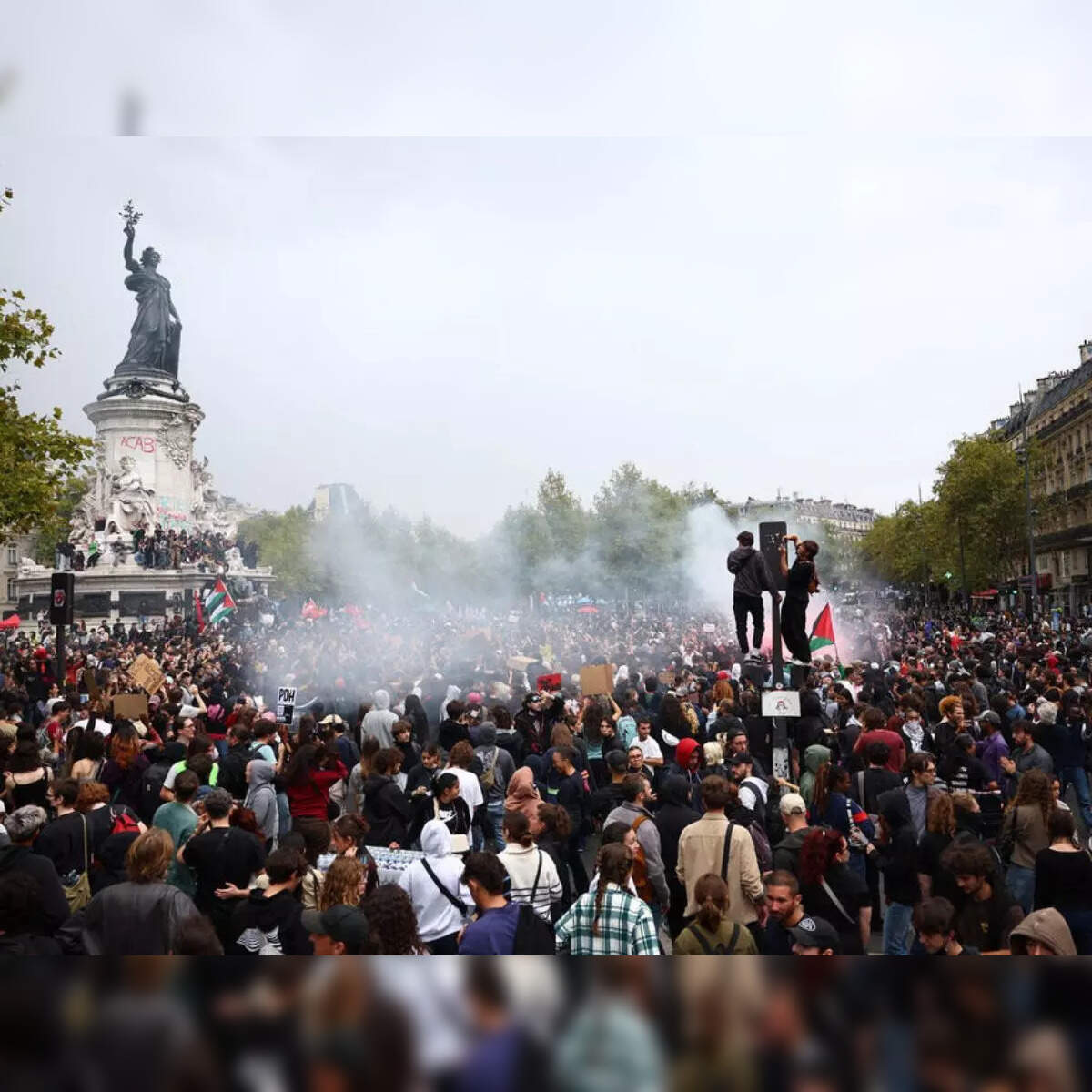
In France, young people demand their future, workers the fruits of their labour, and pensioners the right to live with dignity. Classrooms without teachers, worsening living conditions, problems in public services and distrust of political power are concrete causes of the anger building in the streets. Protests against the Macron administration have moved beyond any single reform or government decision. The problems experienced by different social groups have the potential to converge around contradictions generated by the same economic and political order.
What is truly unsettling in France is not that people are becoming angry, but that their anger is beginning to find common ground.
Someone who once regarded their poverty as personal failure, unemployment as fate and lack of prospects as an individual dead end reaches another level of awareness upon discovering that millions share that same predicament. This is where anger becomes social. When a connection emerges between a student’s stolen future and a worker’s poverty, between a pensioner’s financial hardship and declining public services, separate protests can develop into a common political challenge.
For what shakes a social order is not the scale of poverty, but the moment those being impoverished begin to question its causes together.
Capital maintains its dominance not only by exploiting labour but also by dividing the exploited. Politics that pits a worker against a migrant, one poor person against another and an unemployed person against someone in work conceals the real sources of inequality. The fear of migrants fuelled by the far right and the economic order defended in the name of stability by centrist politics seek, from different positions, to direct social discontent. In one case anger is redirected towards another target; in the other its limits are drawn. The exploited are thus encouraged to confront one another, while exploitation itself remains unquestioned.
The greatest danger to an established order is not a growing number of hungry people, but their coming together to question the causes of their hunger.
France’s streets carry not only today’s anger but also the traces of historical reckonings suppressed in this country. The conditions that gave rise to the Paris Commune in 1871 are not those of today. Yet the Commune’s historical importance lies not simply in an uprising, but in the oppressed themselves raising the question of who should hold political power. The workers of Paris asked a question that went beyond replacing their rulers: Why should those who sustain a society not have a decisive say in governing it?
The Commune was crushed in blood. But what was suppressed was not merely an experiment in government; it was a historical possibility demonstrating that working people could determine their own fate. To claim that the Commune is being reborn in France’s streets today would be easy romanticism. What matters is that, after so many years, the same fundamental contradiction persists in different forms: Those who produce wealth are still not those who control it. This is history’s unsettled account.
The answer to this question cannot be found at the ballot box alone. Elections can change governments; but as long as ownership of the means of production, the economic power of capital and labour’s dependence remain in place, limits to political change remain as well. The fall of a government is not the end of a system of exploitation. A change in who holds political office does not mean that control over social wealth also changes hands.
Solidarity against the devastation in Gaza, which resonates in France’s streets, carries a significance of its own. The rejection in other lands of the suffering inflicted on one part of humanity shows that national borders cannot entirely confine political conscience. Yet the true strength of solidarity lies not only in witnessing suffering, but in questioning the political and economic relations that make it possible.
I do not see a crowd in France’s streets that should be romanticised. I know too much history to mistake anger itself for revolution. We know how unorganised anger disperses, how rebellion that fails to develop into consciousness is exhausted, and how people’s suffering can be turned against them once again. History is full of such examples. When anger does not understand its own causes, it can once again become a weapon in the hands of the very order that produced it.
That is why the issue is not how many days the streets will remain full, how many governments will be shaken, or who will win an election. The issue is how far the relations that sustain labour’s dependence on capital will be questioned. The power of social anger lies not in the number of people in a crowd, but in the capacity of separate struggles to develop into a shared consciousness and an organised will.
This is the decisive question in France today: will people challenge only the consequences of the lives imposed upon them, or will they also debate changing the relations that produce those lives?
A society’s true breaking point is not the moment people can no longer endure, but the moment they understand together why they have been forced to endure.
For an established order does not fear people becoming angry one by one; it fears the moment they realise they are no longer alone.