


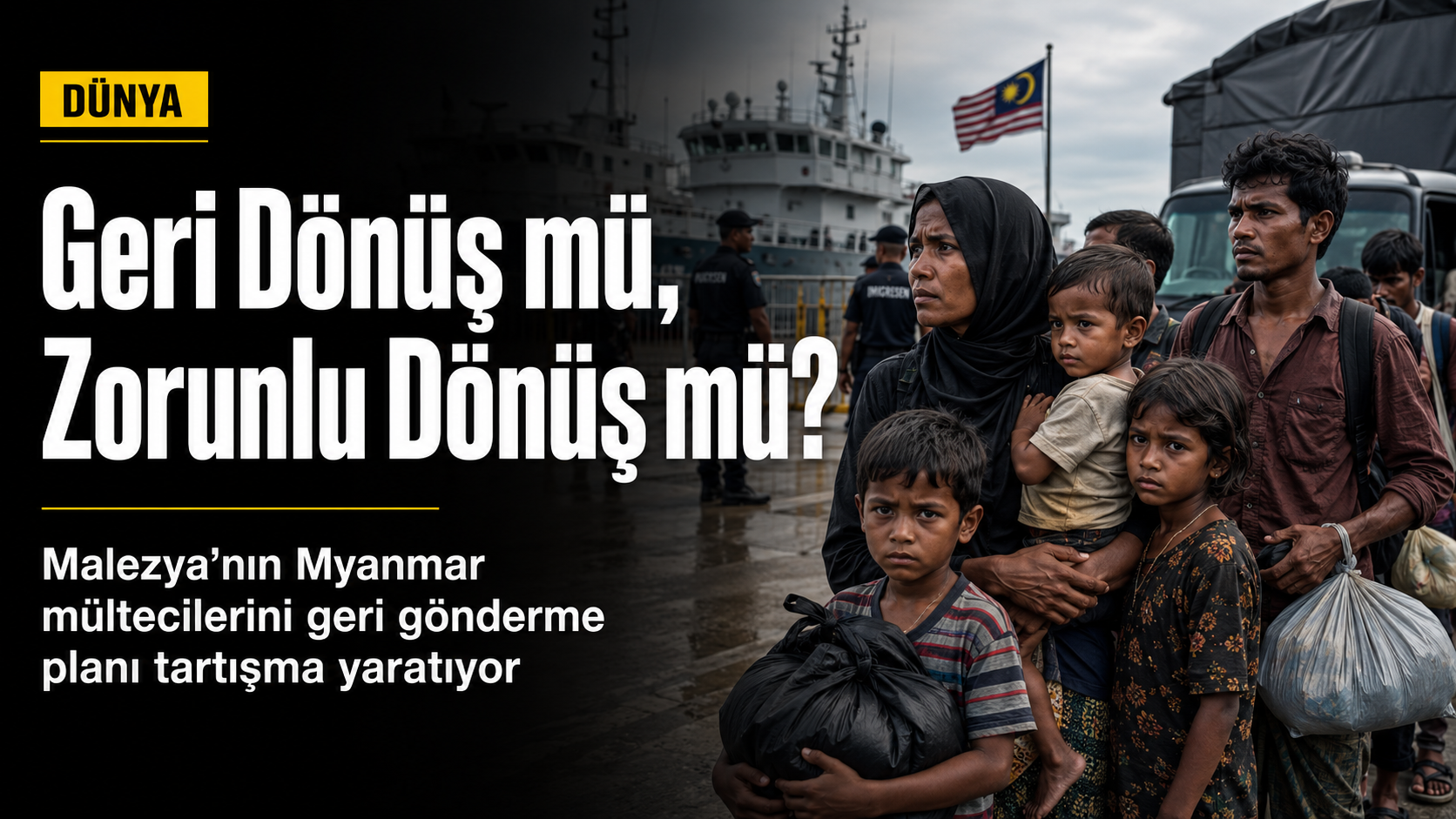
Malaysia’s plan to repatriate thousands of Myanmar refugees has reignited the debate over the distinction between ‘voluntary return’ and forced repatriation. Whilst conflict and serious human rights violations continue in Myanmar, the United Nations High Commissioner for Refugees emphasises that the country is not safe.
The Malaysian government is preparing to repatriate approximately 1,500 Myanmar refugees in the first phase. It is reported that the broader plan covers a total of 5,000 Rohingya refugees. The government describes this process as “voluntary return”. However, this characterisation is highly contentious due to the legal and social conditions faced by the refugees.
The United Nations High Commissioner for Refugees (UNHCR) states that armed conflict and insecurity persist in Myanmar, and therefore the conditions for a return to the country are not yet in place. The UNHCR also emphasises that returns must take place only on a voluntary, safe, informed and dignified basis.
This is where the most critical issue arises. If a person lacks permanent status in the country where they are residing, has limited access to the right to work and social security, faces an uncertain future, and lives in constant fear of deportation, to what extent can their ‘choice to return’ be considered a free one?
Malaysia is one of the countries in South-East Asia hosting the largest number of Myanmar refugees. The majority of refugees in the country are Rohingya and people from other ethnic communities in Myanmar. However, as Malaysia lacks a comprehensive national asylum system, the legal status of refugees is extremely precarious.
In Myanmar, meanwhile, the civil war and political violence that began following the 2021 military coup are still ongoing. In many parts of the country, fighting, forced displacement and serious human rights violations continue. In such a context, the return of thousands of people cannot be viewed merely as a matter of migration management.
One of the fundamental principles of international protection is that people must not be forcibly returned to countries where their lives or fundamental rights would be seriously at risk. Malaysia’s plan therefore raises the question of what political pressure and coercion lie behind the concept of ‘return’.
There is a method becoming increasingly common in migration policies today: states do not directly refer to ‘forced return’, but instead use softer terms such as ‘voluntary return’, ‘resettlement’ or ‘readmission’. However, a change in terminology does not eliminate the danger people face.
The real question is:
If a country is not safe, can return truly be voluntary?
From GOCCOM’s perspective, the issue is not merely how many people will be returned. The real issue is, in a world where the right to asylum is being progressively eroded, under what conditions and what pressures people in need of protection are being forced to ‘return’.