Category: Turkey

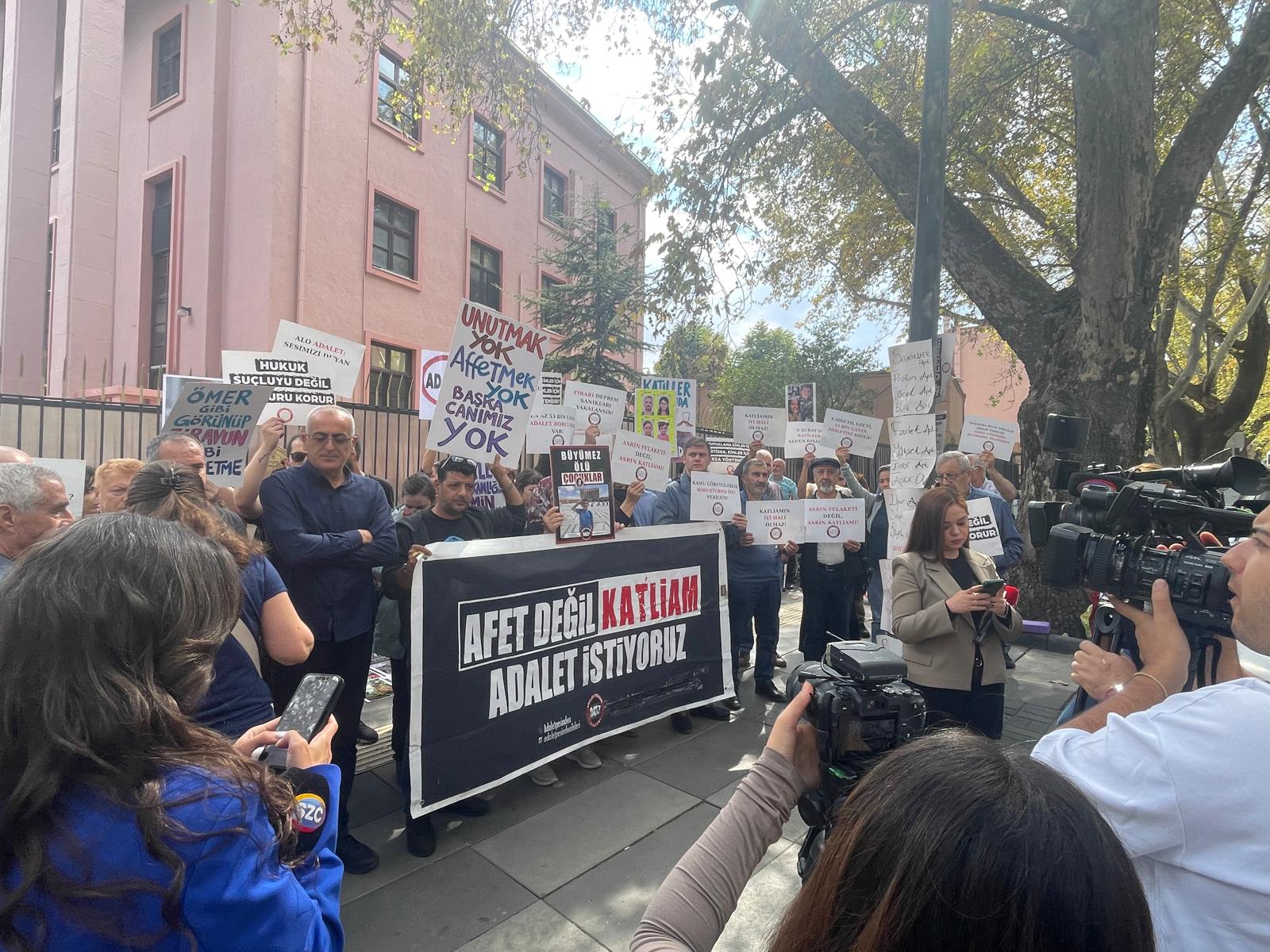
  • The press release issued on 20 September 2026 sets out in detail, with supporting evidence, the appalling injustice of the situation. We are publishing the statement in full:

    The press release issued on 20 September 2026 sets out in detail, with supporting evidence, the appalling injustice of the situation. We are publishing the statement in full:

    PRESS RELEASE
    FROM THE ‘FAMILIES IN PURSUIT OF JUSTICE’ PLATFORM
    20 September 2026
    Dear members of the press,

    It has been 1,322 days – four judicial years – since the 6 February earthquakes, which we have termed the ‘Massacre of the Century’. Despite this, justice has still not been served.
    The new judicial year began on 1 September. We, however, are still owed justice from previous judicial years.
    The rule of law requires that no one be held above the law by virtue of their position, title or influence, and that everyone be equal before the law. Justice must be administered without delay, without discrimination and free from the influence of any authority. Judicial independence must be realised not merely on paper, but in every investigation, every case file and every judgement.
    The problem we are now facing, at the end of four judicial years, is no longer merely a matter of delays in individual case files. We are confronted with a structural accountability issue that extends from investigations to expert witness proceedings, and from the accountability of public officials to the rules of criminal procedure.

    THERE ARE
    STILL CASES WHERE INDICTMENTS HAVE NOT YET BEEN DRAWN UP In dozens of cases, including those involving the Rana Block of Flats, where 35 people lost their lives, and the Arı Block of Flats, where 31 people lost their lives, indictments have still not been drawn up.
    It is unacceptable that, more than three and a half years on, investigations into these fatal collapses remain incomplete. Evidence must be gathered, those responsible identified, and investigations concluded within a reasonable timeframe.
    Cases currently at the investigation stage must not be delayed any further; where there is sufficient suspicion, indictments must be drawn up without delay.

    CRIMINAL JUSTICE MUST
    BE APPLIED FAIRLY AND CONSISTENTLY In the Ebrar Sitesi Block G case in Kahramanmaraş, where we lost 124 lives, whilst the contractor was sentenced to 17 years and 4 months’ imprisonment, the eight-year sentences handed down to the then Director of Town Planning and his deputy, who were also on trial in the same case, were reduced to 6 years and 8 months each following the application of a ‘good behaviour discount’.
    In the Penta Park Site case, a ‘good behaviour discount’ was applied to a contractor who was caught attempting to flee abroad by boat.
    Discretionary reductions should not become an automatic procedure; they must be assessed in a concrete, verifiable and reasoned manner in each individual case. Justice requires the equal and consistent application of criminal law to all.

    FUGITIVE DEFENDANTS MUST
    BE APPREHENDED Despite a red notice being issued for the contractor in the Üzümkent Site case, in which we lost 83 lives in Adıyaman, he has remained at large for months. In the Palmiye Sitesi case in Kahramanmaraş, where 152 lives were lost, the contractor who received a prison sentence has been on the run for a long time.
    Locating defendants subject to arrest warrants and bringing them before the courts is essential for an effective criminal trial. All effective measures to apprehend the fugitive defendants must be taken without delay.

    THE CONSEQUENCES OF THE ‘URBAN PLANNING AMNESTY’ MUST ALSO BE INVESTIGATED
    It has emerged that the Trend Garden Residence in Malatya, where 31 lives were lost, was expanded from 12 flats to 42 under the ‘Urban Planning Amnesty’.
    In this and similar cases, it is not only those responsible for the building’s final condition who must be investigated, but also the administrative and legal processes that made the alterations affecting the structure’s safety possible.
    The impact of the ‘Urban Planning Peace’ regulations on buildings that collapsed in the earthquake, and the role of the individuals and institutions bearing responsibility in these processes, must be thoroughly investigated.

    THE NATURE OF THE OFFENCE MUST
    BE DETERMINED ON THE BASIS OF EVIDENCE In the case of the Alpargün Block of Flats in Adana, where we lost 96 lives, the local court handed down 62 life sentences and a total of 865 years’ imprisonment for the offence of “manslaughter with probable intent”. The ruling has been referred for judicial review.
    Determining the nature of the offence in earthquake cases is one of the most crucial issues in the pursuit of justice. Our demand is not that all cases be automatically assessed under the same legal classification. If the evidence in a specific case demonstrates that the defendant was aware of the risks posed by the building and nevertheless continued with their actions, the possibility of intent must be effectively investigated; cases must not be automatically limited to the charge of wilful negligence.
    When making this assessment, the fact that the same defendant may be on trial in other earthquake-related cases should not be overlooked. We observe that some defendants are being tried in connection with the collapse of numerous separate buildings.
    Being a defendant in more than one case does not, in itself, indicate guilt or a more serious offence. However, it must be investigated whether similar acts and omissions have recurred in different buildings, whether the defendant was aware of the risks, and whether they nevertheless continued with the same pattern of behaviour.
    Recurring practices are significant in determining the defendant’s level of knowledge, foresight and degree of fault. In cases where the same defendant is on trial in more than one earthquake-related case, the links between the cases and the recurring acts and omissions must be taken into account when determining the nature of the offence.

    LIABILITY IS
    NOT LIMITED TO CONTRACTORS ALONE One of the fundamental issues in the investigations and prosecutions conducted following the 6 February earthquakes is that the entire chain of responsibility has not been sufficiently examined.
    The construction and continued use of a building do not consist solely of the contractor’s actions. Various individuals and public bodies have duties and responsibilities in the processes of design, licensing, building inspection, granting of occupation permits, alterations, risk assessment and, where necessary, reinforcement.
    An effective investigation must encompass not only those who built the structure, but the entire chain of oversight and decision-making responsible for the building’s safety.

    THE LIABILITY OF PUBLIC OFFICIALS MUST
    BE INVESTIGATED In the expert report concerning the Arıkan Site in Maraş, it was noted that AFAD’s risk reduction plan had identified the risks pertaining to the area where the building was situated, and the responsibility of public institutions was discussed.
    If expert reports contain findings regarding the negligence or liability of public officials, these must form the subject of an effective investigation. The mechanism for granting permission to investigate public officials must not become a protective shield that delays or effectively obstructs the investigation.
    At the Osmaniye Bilge Housing Estate, we lost 105 lives, 27 of whom were babies and children. The publication of a photograph showing the president of the court that ordered the release of the former mayor, who had been sentenced to imprisonment, alongside the mayor himself, has raised questions regarding the impartiality of the judiciary. This matter must be clarified in a manner that leaves no room for doubt.

    ACCOUNTABILITY MUST
    ALSO BE SEEKED FOR DEATHS IN PUBLIC BUILDINGS In the 6 February earthquakes, hospitals, schools, student halls of residence and other public service buildings were also destroyed.
    Public buildings are not ordinary structures. The safety of a hospital is directly linked to patients’ right to life; the safety of a school is linked to children’s right to life and education; and the safety of a student hall of residence is linked to the state’s duty of care.
    Article 17 of the Constitution guarantees the right to life. The failure to take the necessary inspection, maintenance and reinforcement measures, despite the known risks in public buildings, cannot be viewed merely as a technical or administrative shortcoming; it must also be investigated in terms of the state’s duty to protect life.
    Hatay is one of the most severe examples of this. According to our research, three state-run and two private hospitals in Hatay, where fatalities occurred, have collapsed.
    At the Iskenderun State Hospital, where we lost 125 lives, an indictment has still not been drawn up. Meanwhile, at the Hatay Training and Research Hospital Annex, where 68 lives were lost, no authorisation has been granted to launch an investigation into the former chief physicians and provincial health directors.
    Responsibility for the collapse of public service buildings resulting in such a high loss of life cannot be attributed to a single individual. The actions and omissions of those responsible for the safety of the structure, the identification of risks, decisions regarding maintenance and reinforcement, and the continued use of the building must be investigated.
    In the case of a girls’ student hall of residence where we lost 13 lives, the fact that the building had previously been assessed as ‘earthquake-resistant’ was used as grounds for the acquittal of the engineer who prepared the report at the court of first instance; however, the Court of Cassation overturned this acquittal.
    This example demonstrates once again that every individual involved in determining, approving and authorising the safe use of a building is part of the chain of oversight and responsibility.

    PROCEDURAL ERRORS SHOULD
    NOT DELAY JUSTICE The problem in earthquake cases is not merely the delay in investigations. Procedural errors committed during the trial also lead to some cases being reheard years later.
    In a case where we lost 69 lives, the Regional Court of Appeal’s decision—which was issued without holding a hearing, without investigating objections regarding the signatures on the expert report, and without providing sufficient grounds—was overturned by the Court of Cassation; the case, which has been ongoing for over three and a half years, has had to be retried.
    In another case in Kahramanmaraş, the case has reached the stage of being retried due to legal irregularities in the appeal court’s decision to quash the judgement.
    Justice is not merely a verdict that has been handed down. It requires that the entire process, from the start of the investigation to the final judgement, be conducted in accordance with the law. Families who have been waiting for years in the corridors of the courts should not have to pay the price for procedural errors.

    WE HAVE
    FIVE URGENT DEMANDS FOR THE NEW JUDICIAL YEAR In our struggle for justice, which has now lasted for over three and a half years, we will not allow the chain of negligence to be swept under the carpet.
    Our call to the competent authorities and judicial bodies is clear:

    1. Effective and timely investigations:
      Pending investigations must be completed, evidence must be gathered without delay, and indictments must be drawn up in cases where there is reasonable suspicion.
    2. Investigation of the entire chain of responsibility:
      Investigations must not be limited to contractors; the actions and omissions of all individuals and public officials bearing responsibility in the processes of project design, licensing, building inspection, occupancy permits, risk assessment and structural reinforcement must be investigated. The processes for obtaining investigation authorisation must not act as a barrier to effective investigations.
    3. Independent, impartial and scientific expert assessment:
      Expert reports must be based on scientific data, be verifiable and cover the entire chain of responsibility. Decisions must not be taken until conflicting reports have been resolved.
    4. Determination of the nature of the offence based on an evaluation of all evidence:
      In cases where elements of possible intent are present, this possibility must be effectively investigated; where the same defendant is on trial in more than one earthquake-related case, the connections between the cases, as well as any repeated acts and omissions, must also be assessed.
    5. Trials within a reasonable timeframe and in accordance with due process:
      Effective measures must be taken to apprehend fugitive defendants; the practice of cases dragging on for years due to missing documents, delays by expert witnesses and procedural errors must be brought to an end. Judgements must be reasoned, verifiable and in accordance with the law.
      Four judicial years have passed.
      We no longer seek merely the punishment of individual defendants, but the revelation of why tens of thousands of people lost their lives on 6 February and the accountability of all individuals and institutions responsible for preventing these deaths.
      The rule of law is not merely a slogan. It is put to the test in cases where an indictment has not been drawn up, where public officials have not been investigated, where fugitive defendants remain at large, where expert reports are incomplete, and where cases are sent back to square one due to procedural errors.
      Justice delayed is justice denied!
      We will not give up our struggle for justice until those responsible for the lives we have lost are held to account and the actions and omissions of everyone involved are investigated through an independent and effective judicial process.
      The Families in Pursuit of Justice Platform
      20 September 2026
  • Turkey: A Country of Migration – Those Who Come, Those Who Leave, and Those Who Go Unseen

    Turkey: A Country of Migration – Those Who Come, Those Who Leave, and Those Who Go Unseen

    For many years, Turkey portrayed itself solely as a country from which people migrated to Europe. Today, however, it is a region that simultaneously sends people abroad, receives migrants, serves as a transit route, and sends its own citizens to other countries for economic, political and social reasons. Migration is no longer a temporary ‘problem’ for Turkey; it is one of the fundamental issues underlying the country’s class, political and social structure.

    Discussions on migration in Turkey are often centred solely on the people crossing the border. Numbers, camps, deportation centres, debates on citizenship and slogans that resurface during election campaigns… Yet reducing migration solely to the question of ‘who has arrived?’ renders the real issue invisible. For migration is not merely a movement across borders. Migration is the result of war, poverty, unemployment, oppression, inequality, forced displacement and the loss of a future.

    Turkey’s history of migration is replete with clear examples of this.

    From the 1960s onwards, hundreds of thousands of people went to European countries, primarily Germany, as workers. In those years, Turkey was a country that exported its labour force. People turned to other countries in search of better pay, a more secure future and the chance to support their families. Over time, this migration became permanent; families were reunited, second and third generations were born, and a significant population of Turkish origin emerged within Europe’s economic and social fabric.

    However, emigration from Turkey was never driven solely by economic reasons.

    Following the military coup of 12 September 1980, thousands of people were forced to leave the country for political reasons. Left-wing activists, trade unionists, journalists, students, Kurdish politicians and various opposition groups sought refuge in Europe. In subsequent periods, political repression, conflict and human rights violations gave rise to new waves of exile.

    In the 1990s, the forced evacuation of villages and armed conflict in the Kurdish provinces constituted one of the largest internal migration movements in Turkey’s recent history. Hundreds of thousands of people were driven from their villages and regions to major cities. Istanbul, Mersin, Adana, Izmir, Diyarbakır and other cities bore the social consequences of this forced displacement.

    These people were often not even defined as ‘migrants’, as they had not crossed the country’s borders. Yet what they experienced was one of the harshest forms of migration: the forced loss of their homes, their land, their livelihoods, their social networks and their way of life.

    Today, when migration is discussed, this history is largely forgotten.

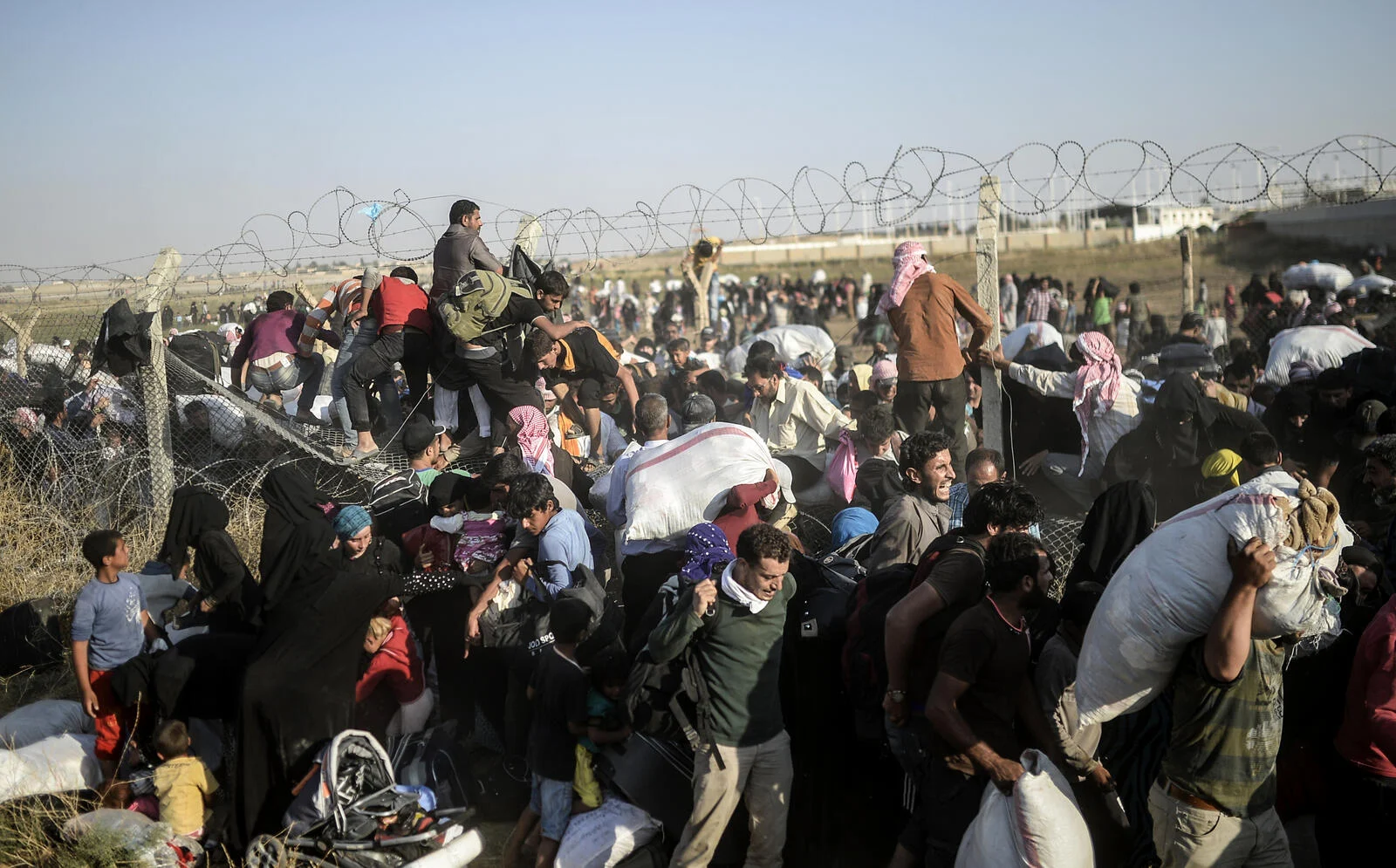
    With the Syrian war, Turkey’s migration regime changed completely. Millions of Syrians arrived in Turkey. Turkey is no longer merely a country of emigration, but has become a country receiving migrants on a massive scale. Subsequently, people from Afghanistan, Iraq, Iran, and various regions of Africa and Asia attempted to reach Europe via Turkey or remained in Turkey.

    Turkey thus found itself in three distinct roles simultaneously: a country of emigration, a country of immigration and a transit country.

    This situation has not merely brought about a demographic shift. It has also made migrant labour a significant part of the Turkish economy.

    Migrants from Syria, Afghanistan and other countries are employed on low wages in the textile, agricultural, construction, manufacturing and service sectors, as well as in the informal economy. They often work long hours without social security, in conditions that leave them vulnerable to workplace accidents.

    The fundamental question here is: who is responsible for migrant workers being paid such low wages?

    Is it the migrant, or is it the economic system that exploits them as an insecure and cheap labour force?

    This distinction is important. Because it is all too easy to point to migrant workers as the cause of the economic crisis, unemployment and poverty. However, it is far more difficult to discuss the structural conditions that suppress wages, weaken trade union organisation, encourage informal work and drive down the cost of labour.

    This is precisely where the political utility of anti-migrant sentiment comes to the fore.

    When the economic crisis deepens, it is possible to direct society’s anger downwards rather than upwards. If rents are rising, migrants are blamed. If unemployment is rising, migrants are blamed. If wages are falling, migrants are blamed. If public services are inadequate, migrants are once again singled out.

    In this way, the most vulnerable sections of society are pitted against one another.

    Whilst the impoverished Turkish citizen and the impoverished Syrian worker are pitted against one another, the economic system that condemns both to precariousness is left out of the debate.

    Anti-migrant sentiment is therefore not merely a matter of prejudice. It also serves a class-based function.

    It intensifies competition amongst workers, prevents the formation of common demands and makes it harder for labour to organise. Whilst the local worker is told ‘a migrant has taken your job’, the migrant worker is given the message ‘if you speak out, you’ll be deported’.

    Ultimately, the winner is capital, which can employ workers for lower wages and with fewer rights.

    Another important dimension of the migration debate in Turkey is the relationship with the European Union.

    For many years, Europe has been attempting to extend its borders beyond its own territory. Turkey has become one of the key centres of this policy. Agreements with the European Union have led to Turkey being positioned as a buffer state that keeps migrants outside Europe’s borders.

    Consequently, the movement of people between Turkey and Europe has increasingly become a matter of negotiation.

    Migrants are no longer seen merely as people in need of protection, but are increasingly viewed as tools in diplomatic negotiations between states.

    On the one hand, Europe says, ‘Protect our borders’. On the other, Turkey occasionally uses migrants as a tool for political pressure.

    In this equation, however, it is the migrants themselves who have the least say.

    They are often unable to decide for themselves whether they will be allowed to cross into Europe, under what conditions they will live in Turkey, or whether they will be sent back.

    As migration policy transforms into security policy, the human being becomes invisible.

    Borders are being fortified, walls are being extended, deportation centres are multiplying, and detentions and deportations are on the rise.

    Yet nobody is asking this question often enough:

    Why did these people set out on their journey?

    Why would a person leave behind the country where they were born, their family, their friends, their language and all their habits?

    Most people do not choose to migrate as an adventure. Migration is often the result of dwindling alternatives.

    If there is war, people flee.

    If there is political oppression, people flee.

    If they cannot find work, if they cannot see a future for their children, if they cannot pay off their debts, if they face the risk of imprisonment for their beliefs, if they cannot escape violence because they are women, or if they face oppression because of their identity, people seek the possibility of a life elsewhere.

    This does not apply solely to those coming to Turkey.

    Today, a large number of young people from Turkey are also looking for ways to go abroad.

    Doctors, engineers, academics, students, artists, IT professionals and people from various other professions are trying to build a life in other countries.

    It is also insufficient to explain this migration solely through the concept of ‘brain drain’.

    Because the issue is not merely about higher salaries.

    People are seeking legal safeguards, freedom of expression, working conditions, education, quality of life and a sense of the future.

    If a significant proportion of a country’s young people have begun to see their future in other countries, migration ceases to be merely an individual choice. It becomes a social indicator.

    Turkey is currently at precisely this juncture.

    On the one hand, migrants arriving in the country are asked, ‘Why are you here?’

    On the other hand, millions of Turkish citizens are searching for the answer to the question: ‘How do I leave this place?’

    This contradiction is perhaps the most striking aspect of the migration debate in Turkey.

    It is easy to blame people coming to Turkey without assessing the economic and political conditions in their own countries. However, a society that fails to question why its own young people wish to go to Germany, Switzerland, the Netherlands, Canada or other countries is rife with inconsistency.

    If we truly wish to understand the issue of migration, we must ask not only ‘who has come?’ but also ‘who is leaving and why?’

    Similarly, we cannot ignore the gender dimension of migration.

    Migrant women face multi-layered inequalities stemming both from being migrants and from being women. Issues such as exploitation in the informal sector, domestic labour, violence, human trafficking, access to healthcare and childcare must be addressed at the heart of migration policy.

    A similar situation applies to children.

    Issues such as migrant children’s access to education, language barriers, child labour and discrimination cannot simply be brushed aside under the heading of ‘integration’.

    A child’s right to education, healthcare and safety should not be determined by the passport they hold.

    The measure of migration policy should not be how strictly the border is guarded, but how well human life and dignity are protected.

    In Turkey, however, migrants are increasingly becoming one of the key tools of electoral politics.

    Political parties are attempting to win votes by exploiting the issue of migrants.

    Whilst one side tightens its deportation policies, the other responds with even harsher promises.

    Thus, human life is being turned into a pawn in political competition.

    Migrants themselves, however, are often unable to have a say in this debate.

    Everyone talks about them, but very few people ask what they think, what they are going through, why they have come, or what they want.

    At GOCCOM, we believe that this is precisely where a different approach is needed.

    It is possible to discuss migration without romanticising it, without ignoring its problems, and without turning migrants into scapegoats.

    Border policies can be debated.

    Migration management can be debated.

    The capacity of public services can be discussed.

    Employment, housing and education policies can be debated.

    However, the answer to none of these can be racism, hatred or collective punishment.

    A policy that devalues people on the basis of their nationality does not solve any social problem.

    On the contrary, it creates new inequalities and new conflicts.

    What Turkey needs is not a harsher tone towards migrants, but a more serious political programme to tackle the root causes of migration.

    Migration cannot be halted without addressing war policies.

    Economic migration cannot be reduced without tackling poverty and inequality.

    Political migration cannot be prevented without strengthening democracy and the rule of law.

    People will continue to leave countries where they see no future.

    This reality applies to Turkey as well.

    Some of those living in Turkey today have come here from other countries.

    Meanwhile, a significant proportion of those born in Turkey are considering moving to another country.

    It is impossible to consider the stories of these two groups as entirely separate from one another.

    Both are people moving in different directions within the same global order.

    One is fleeing war.

    The other from unemployment.

    One is fleeing political oppression.

    The other from a lack of prospects.

    One is crossing the border into Turkey.

    The other is queuing for a visa in order to leave Turkey.

    That is why we must place people at the heart of the migration issue.

    Migrants are not the cause of this system.

    More often than not, they are its consequence.

    It is easy to pit against one another the people who pay the price for war, poverty, oppression, unemployment and inequality.

    What is difficult is to question the system that drives them to flee.

    What Turkey needs in relation to the migration issue is not more fear, hatred and hostility; it is a new political discourse centred on rights, equality, solidarity and human dignity.

    For there is not as great a distance as one might think between the person regarded as a ‘foreigner’ on this side of the border today and the Turkish citizen waiting as a ‘foreigner’ at another country’s border tomorrow.

    Both share the same fundamental demand:

    A safe, free life that respects human dignity.


    GOCCOM Turkey