Category: Switzerland

  • Fribourg: Warning Over Education and Care for Asylum-Seeking Children

    Fribourg: Warning Over Education and Care for Asylum-Seeking Children

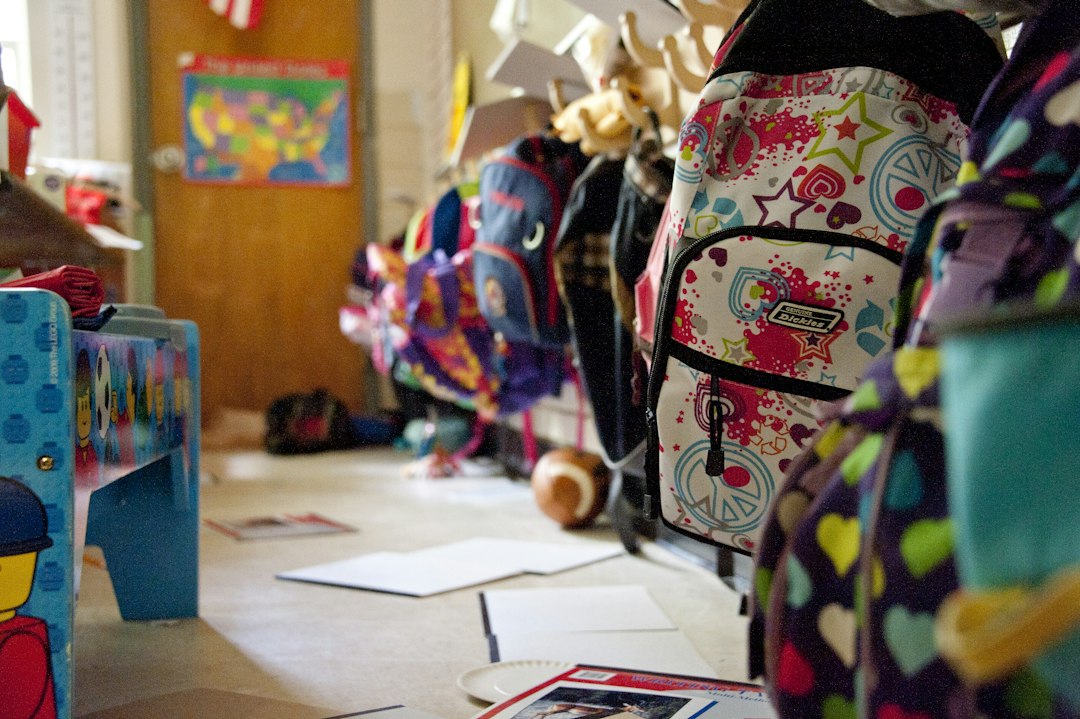
    In Fribourg, civil society organisations supporting migrants and asylum seekers have raised concerns about serious shortcomings in children’s access to education, continuity of healthcare and accommodation conditions for unaccompanied minors. The Ensemble plus forts! (Stronger Together) coalition, which includes organisations such as Association Ensemble, Osons l’accueil! and La Cie Après ça je ne parle plus, said in its assessment of 8 October 2026 that some children receive significantly fewer teaching hours than those provided under the standard school curriculum.

    According to the coalition, the educational pathways of asylum-seeking children are shaped more by transport options, administrative arrangements and family circumstances than by their educational needs. This undermines equal access to education and disrupts the continuity of schooling. The organisations stress that children must not face educational disadvantages because of their migration status or their families’ living conditions.

    Shortcomings in healthcare are another major concern raised by the coalition. According to the organisations, healthcare for asylum seekers relies heavily on nursing teams. However, the lack of regular oversight by a responsible doctor creates problems for continuity of treatment. The statement explicitly emphasises that the organisations do not question the dedication or professional competence of nurses. Nevertheless, emergency departments have become the main way for many asylum seekers to gain direct access to a doctor. The organisations warn that limiting treatment to emergency interventions can have serious consequences, especially for conditions requiring long-term follow-up.

    Staff shortages at centres accommodating unaccompanied minors are another significant problem. The coalition reports that despite staff members’ efforts, current staffing levels are insufficient to meet the children’s needs. Compared with other educational and care institutions, limited staffing restricts individual support and raises concerns about safety and protection. For children living apart from their families and requiring special protection, accommodation cannot simply mean providing a bed; educational, social and healthcare needs must be addressed together.

    Established in 2020, the Ensemble plus forts! coalition says its demands for improved living conditions for asylum seekers remain relevant. They include better accommodation, broader access to the right to work and regular support for volunteer associations. The coalition argues that barriers to fundamental rights must be addressed through lasting public policies rather than temporary measures.

    The findings reported by the Fribourg-based local outlet Frapp are based on assessments by organisations working with asylum seekers. The report does not include a response from cantonal authorities to these criticisms. The shortcomings described are therefore presented as the organisations’ assessments. Nevertheless, they raise the question of how asylum-seeking children’s rights to education, healthcare and safe accommodation are being guaranteed.

    GOCCOM Switzerland
  • Geneva: neighbourhood solidarity against racism

    The meetings taking place throughout October in Geneva’s Jonction neighbourhood address the fight against racism through a programme extending from everyday life to historical memory. Organised at the initiative of the Jonction neighbourhood centre association, the events bring together local residents, solidarity organisations, educators and artists. Announced under the call “We tear down walls, we build bridges,” the programme invites participants to discuss obstacles to living together and to open spaces for collective creation.

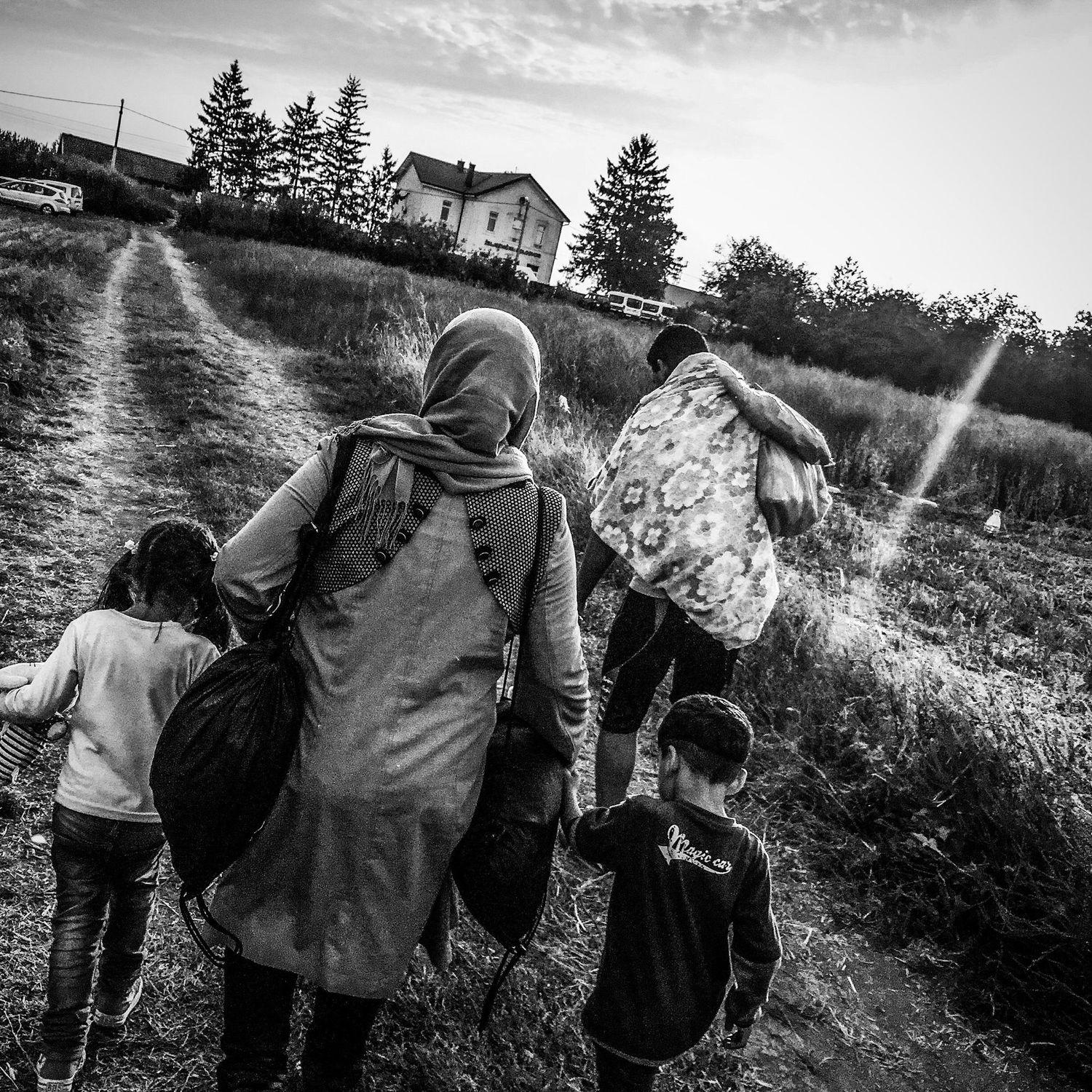
    One of the programme’s most important themes from the perspective of migrants concerns the experiences of people waiting for family reunification in Switzerland. At a free meeting on 14 October at 6.30 p.m. at the Jonction neighbourhood centre, participants will listen to and discuss the podcast “Les liens suspendus”.

    Produced jointly by ODAE romand, which monitors asylum and foreign nationals’ rights, and elisa-asile, the podcast is based on the accounts of parents, children and the professionals who support them. The four-part series examines administrative and financial barriers to family reunification, the effects of long separations on children, and the difficulties families face after being reunited. ODAE stresses that the conditions imposed by application procedures can clash with the realities of life in exile. The discussion therefore turns to the lives of the people waiting behind administrative case files.

    The historical roots of racism are also at the centre of the programme. A guided visit to the exhibition “Colonialism – Switzerland was involved too” at the Château de Prangins is planned for 7 October. Prepared by the Swiss National Museum, the exhibition uses documents, photographs and works of art to make visible the links between Swiss individuals and companies and the colonial system. Topics include participation in the slave trade, fortunes made from colonial goods, missionary activities and Swiss nationals who served in colonial armies. The exhibition also examines the role of racist theories developed at the universities of Geneva and Zurich in legitimising colonial domination.

    Memory preserved in exile will be explored through archives relating to the dictatorship in Chile. On 8 October at 6.30 p.m., a meeting at L’Espace Après will present historical documents from the Comité Mémoire et Justice. Built with contributions from Chilean exiles living in Switzerland, the archives are the result of long-term work documenting human rights violations since the mid-1970s.

    The documents, transferred to the Archives contestataires in 2023, aim not only to record individual cases of abuse but also to understand the mechanisms that made the establishment and continuation of the Pinochet dictatorship possible. Initial inventories will be presented at the meeting; committee members, archivist Frédéric Deshusses and researcher Amiel Guyot will discuss the importance of this documentation work. Online participation has also been announced.

    Violence against civilians in Gaza will be addressed through cinema. On 11 October at 6.00 p.m., Cinélux will screen the documentary “NAZA” by Yuval Abraham and Rachel Szor. According to the cinema’s presentation, the film examines the mechanisms of Israel’s mass killing operations against Palestinian civilians in Gaza. The screening will be followed by a discussion with Middle East expert Riccardo Bocco. The 80-minute film is in Hebrew and English with French subtitles. Admission is ticketed.

    The programme also includes communal meals and workshops focused on young people and creativity. A meal prepared by a women’s collective is planned for 9 October, a discussion on anti-racist education with AFEEDA for 13 October, and a collective mural project in Parc Gourgas for 14 October. The resulting work will be presented on 16 October. Most events are free; some require registration or a participation fee.

    The organisers’ brochure gives the overall dates as 5–17 October, while the online calendar ends on 16 October. Participants should therefore check the time and venue before attending. For information and reservations, the Jonction neighbourhood centre at Avenue de Sainte-Clotilde 18 bis can be contacted on 022 545 20 20 or by email at mqj@mqj.ch.

    GOCCOM Switzerland

  • Family Reunification Ruling in Switzerland: Mother Can Remain in the Country

    Family Reunification Ruling in Switzerland: Mother Can Remain in the Country

    The Administrative Court of Bern ruled that a woman who did not possess a valid identity document or residence permit, but who is the mother of four Swiss children, should be allowed to remain in Switzerland. The court concluded that the family’s right to live together and the children’s particular circumstances outweighed the public interest arising from the fact that the woman’s identity could not be definitively established.

    The woman, who is of East African origin, states that she is an Eritrean national. However, her identity and nationality could not be definitively verified by the Swiss authorities. Previous assessments by the British authorities had suggested that she might be of Ethiopian origin. The woman travelled to the United Kingdom in 2008 and made four asylum applications there; all of her applications were rejected.

    In 2021, the woman married her Swiss partner in the United Kingdom. Her husband subsequently returned to Switzerland to work, and the couple’s four children also moved to Switzerland over time. The mother, however, entered the country without the necessary entry visa. All four of the family’s children are Swiss nationals and, according to the court file, three of the children require special support.

    The authorities in Bern rejected her application for residence on the grounds that she was unable to produce valid identity documents and her identity could not be conclusively established. The woman appealed against this decision. In its assessment, the Bern Administrative Court considered not only the mother’s immigration status but also the family as a whole and the children’s circumstances. The court assessed the mother’s role within the family, the children’s special needs and whether it would be reasonable for the father, who works in Switzerland, to move to another country in order to maintain family life.

    The court ruled that, under these circumstances, the mother’s interest in living with her family in Switzerland outweighed the state’s interest in definitively establishing her identity. Consequently, the Bern Cantonal Population Services Office was instructed to process the woman’s application for a residence permit under the family reunification scheme.

    The decision does not imply an automatic right of residence for anyone without identity documents or a residence permit. The court’s decision was based on the fact that four of the children were Swiss citizens, three required special support, the father was working in Switzerland, and it was deemed unreasonable for the family to live together in another country. The case stands out as an important ruling demonstrating that, in immigration law, it is not only documentation and residence status that are decisive, but also the protection of children’s rights and family life.

    GOCCOM SWITZERLAND

  • Switzerland is making it easier for Ukrainians granted temporary protection to access the labour market

    Switzerland is making it easier for Ukrainians granted temporary protection to access the labour market

    In Switzerland, a new regulation designed to make it easier for people from Ukraine with temporary protection status to access the labour market has cleared a major parliamentary hurdle. The National Council approved the amendment proposed by the Federal Council by 128 votes to 65.

    The Council of States must now consider the bill. The planned changes have therefore not yet come into force.

    A key aspect of the new regulation concerns the change of canton for people with protection status S who live and work in Switzerland.

    Under the current system, people with S protection status are assigned to a specific canton upon their arrival in Switzerland. Whilst they may work in another canton, changing their canton of residence is not always straightforward.

    Under the new regulations, individuals with S protection status will, subject to certain conditions, be able to change cantons provided they are not dependent on social assistance and have been in employment for at least twelve months. It should also be possible to take into account very long commutes or working hours that make commuting from their current place of residence considerably more difficult.

    People with S protection status are already permitted to work in Switzerland. The new rules therefore do not create a new right to work. Rather, they are intended to facilitate integration into the labour market and enable employees to better align their place of residence with their place of work.

    What does ‘S’ protection status mean?

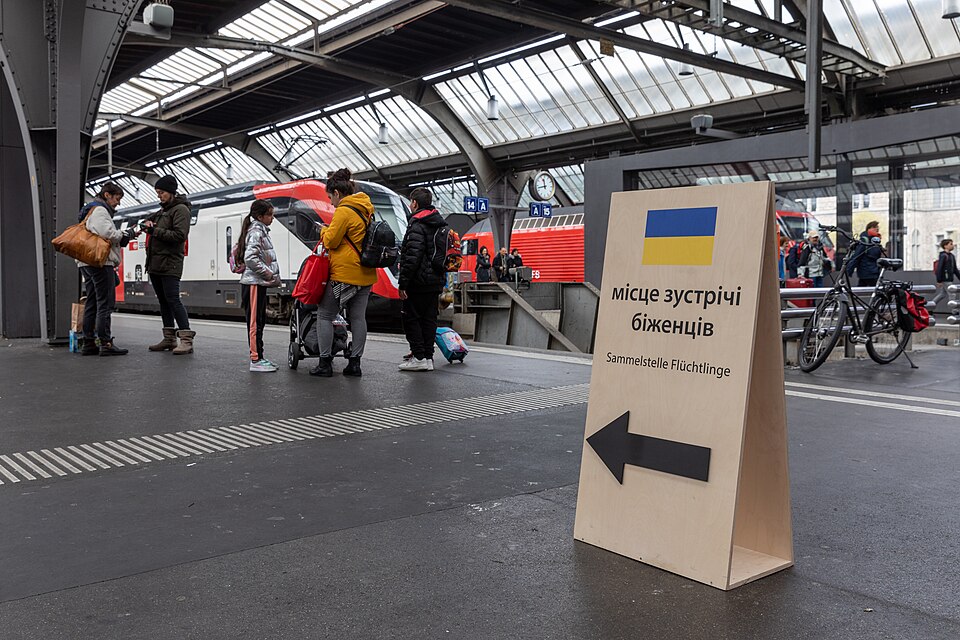
    Protection status S is a form of temporary protection for people who are forced to leave their country in large numbers due to war or a comparable serious threat.

    Switzerland first activated this status on a large scale in 2022 for people who fled the country following the Russian attack on Ukraine.

    People with protection status S are granted temporary protection in Switzerland without first having to go through a lengthy individual asylum procedure. They are permitted to work, have access to education and healthcare, and may receive social assistance under certain conditions.

    In view of the continuing unstable situation in Ukraine, the Swiss Government has decided not to lift protection status S generally before 4 March 2028.

    The federal government has been working for several years to increase the participation of people with S protection status in the labour market. One aim is to promote the economic independence of those capable of working and to reduce their dependence on social assistance.

    The amendment to the law adopted by the National Council does not only affect people with S protection status. Access to the labour market is also to be made easier for certain third-country nationals who have completed a course of education in Switzerland.

    Among others, this is intended to benefit people who have completed higher vocational training in Switzerland or who carry out certain academic activities and whose work is of particular scientific or economic significance.

    If the Council of States also approves the bill and the parliamentary process is concluded, existing barriers between place of residence and place of work could be reduced, particularly for Ukrainians who have been living and working in Switzerland for several years.

    At this stage, however, these are not yet new rights that have come into force. The legislative amendment is still going through the parliamentary process.

    GOCCOM SWITZERLAND

  • Asylum Figures Are Falling in Switzerland

    Asylum Figures Are Falling in Switzerland

    Whilst the decline in asylum applications in Switzerland continues, the federal authorities have revised down their forecast for the number of applications in 2026 from 26,000 to 22,000. In July, 1,915 people applied for asylum, whilst hundreds were returned from the country during the same month. The numbers are falling; however, the tightening of Europe’s migration policy shows no sign of abating.

    The number of asylum applications in Switzerland is set to fall significantly in 2026. Based on data from the State Secretariat for Migration, federal authorities have revised down the number of asylum applications, originally forecast at around 26,000 at the start of the year, to 22,000.

    The fact that asylum applications in Switzerland remained below 10,000 in the first half of the year points to a notable decline in migration flows in recent years. In July, 1,915 asylum applications were recorded in Switzerland. This figure is 22.8 per cent lower than in the same period last year. Although there was a slight increase compared with June, the total number of applications in the first seven months of the year remained approximately 18 per cent below the figure for the same period in 2025.

    In July, the highest number of asylum applications was made by Afghan nationals. A total of 351 applications were recorded from Afghanistan, 268 from Eritrea, 255 from Algeria, 179 from Turkey and 149 from Ethiopia.

    These figures reflect not only the number of people reaching Switzerland, but also the consequences of ongoing wars, political oppression, economic devastation and insecurity in various parts of the world, which extend as far as Europe. Behind every figure lies a person, a journey and, in many cases, a life left behind.

    Deportations continue

    Alongside the decline in application numbers, deportation policies are also continuing. In July, a total of 939 people left Switzerland in an organised manner. Of these, 569 left the country of their own accord, whilst 370 were returned under police supervision to their home country, the responsible Dublin country or a third country.

    In the same month, the Swiss authorities issued first-instance decisions on 2,372 asylum cases. Asylum was granted in approximately 28 per cent of these applications.

    This picture shows that the asylum system cannot be assessed solely on the basis of the number of people arriving in the country. On the one hand, there are people seeking protection; on the other, there are increasingly accelerated decision-making and return mechanisms.

    The Swiss authorities attribute the decline in applications in particular to reduced movement along the Central Mediterranean and Balkan routes. A fall in applications from Afghanistan, Turkey and Eritrea is also bringing down the overall figures.

    However, this raises an important question: does the fact that people are unable to reach Europe mean that the conditions forcing them to migrate have disappeared?

    Wars have not ended. Political repression has not ceased. Poverty, the climate crisis and regional conflicts persist. What has changed, to a large extent, is that reaching Europe has become increasingly difficult.

    Europe is transitioning to a new migration regime

    The decline in application numbers in Switzerland is taking place alongside a broader transformation across Europe. From June 2026, Switzerland began implementing the sections of the European Union’s new Migration and Asylum Pact that concern it under the Schengen/Dublin system.

    The new system is based on strengthening border controls, processing applications more quickly, activating the Dublin procedures and speeding up return processes.

    The focus of Europe’s migration policy is gradually shifting from the question ‘why do people migrate?’ to ‘how can people be prevented from reaching Europe?’.

    This shift is not merely an administrative adjustment. It is a political transformation that directly affects the lives of migrants, their access to the right to asylum, and Europe’s understanding of human rights.

    The decline in asylum applications to Switzerland from 26,000 to 22,000 may be viewed by the state as a manageable migration situation. However, reducing migration to mere figures obscures the essence of the issue.

    The real issue is not how many people have reached the border; it is why millions of people have been forced to leave the country they call home.

    And the more fundamental question remains:

    Will Europe tackle the root causes of migration, or will it tackle the migrants themselves?

    GOCCOM | Switzerland