


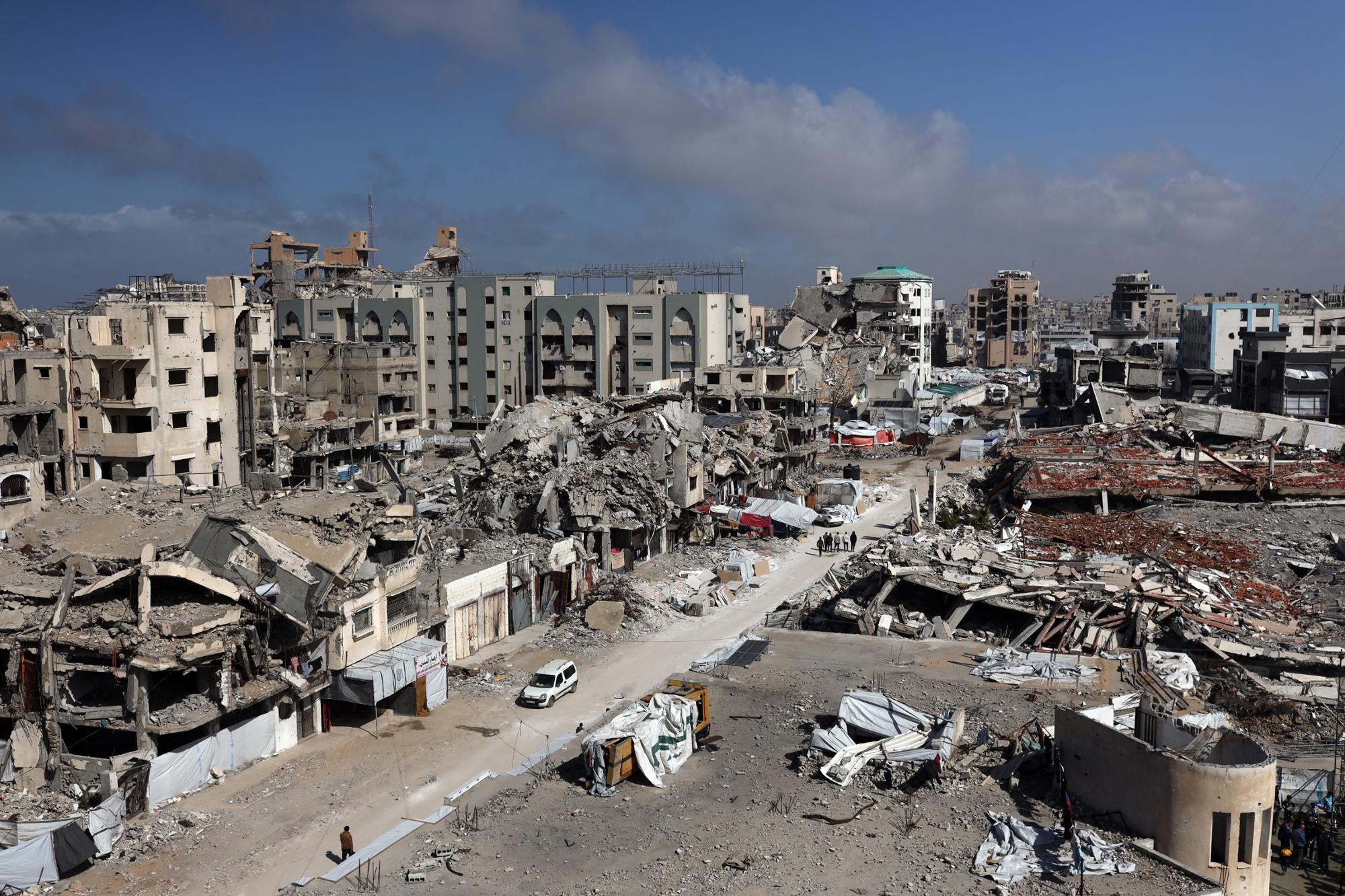
When does a person become a migrant? When they cross a border? When another country stamps their passport? Or when their home is destroyed, their neighbourhood is wiped off the map, they bury their children and there is no longer a life to return to? Gaza offers one of the most painful answers to that question today.
According to Palestinian Authority figures cited in Reuters’ report of 4 October 2026, more than 100,000 Palestinians who left Gaza during the war that began after 7 October 2023 remain abroad. Around 7,000 people have returned to Gaza. Three years have passed since the war began. A ceasefire was announced, reconstruction was discussed and political plans were unveiled. But for those who want to go home, a safe and liveable future remains far away.
Because returning takes more than opening a border crossing. It requires a home, a liveable neighbourhood, schools for children, accessible hospitals, drinking water and at least some hope that tomorrow will be safer than today. Much of this is still missing in Gaza.
According to the assessment cited in the UN Office for the Coordination of Humanitarian Affairs’ situation report dated 25 September, 94 per cent of Gaza’s population urgently needs shelter assistance and essential household items. Sixty-five per cent of households are living in tents or makeshift shelters. As winter approaches, hundreds of thousands of people face the threat of rain and flooding.
The ceasefire has not erased the war’s consequences for people. The UN report describes continuing strikes and other military activities, alongside severe difficulties in accessing water, essential healthcare and shelter materials. Humanitarian funding shortfalls and restrictions on incoming materials also prevent families from preparing for winter.
Many of those who managed to leave Gaza are waiting in other countries. They can neither fully build a new life nor return to their old one. Omar al-Hassayna is one of them.
According to Reuters, Hassayna lives in Cairo. Palestinian authorities say that 308 members of his extended family were killed in Israeli strikes on 22 November 2023 against the apartment buildings in Gaza City where they had sought shelter. Among the victims were his wife, four adult sons and four young grandchildren.
Reuters reported that the Israeli military did not answer questions about the details of that attack. The military said its strikes in Gaza were directed at military targets and that it sought to reduce harm to civilians.
Hassayna supports himself in Cairo by selling some of the goods left from his firefighting and safety equipment business in Gaza. But he waits. He waits for the day he can return to Gaza. His story is not only one man’s tragedy; it is one of thousands of stories showing how war produces migration.
Because migration often does not begin with people waking up one morning and deciding to live in another country. First comes war. Then the bombs. Homes are destroyed. Businesses close. Schools become unusable. Hospitals can no longer function. Families are torn apart. The material ties connecting people to the land where they live are severed one by one. And eventually only one option remains: to leave.
Those same people are then discussed elsewhere in the world as ‘migrants’, ‘refugees’, ‘asylum seekers’ or ‘foreigners’. How should borders be protected? How many people should be admitted? Who should be sent back? How can migration be stopped? Yet another question should come before all of these: Who creates the conditions that force people to leave?
Gaza puts that question before the world in all its starkness. The more than 100,000 people from Gaza now living abroad are not simply Palestinians in other countries. Many are waiting for the homes, neighbourhoods and lives they left behind to be rebuilt.
But reconstruction means more than pouring concrete. Rebuilding a city means enabling people to live safely, children to attend school, hospitals to function, water to flow and residents to earn a living. It also means being able to believe that the same destruction will not happen again. Until these conditions exist, ‘return’ remains merely a political concept.
The people of Gaza are not statistics. Behind every number are an interrupted life, a lost family, an abandoned home and memories that had to be carried away. When the world discusses migration today, it often sees the person waiting at the border. It does not see what that person experienced before arriving there.
Gaza makes the reality unmistakable: Migration does not begin at the border. It begins when the place where a person can live is destroyed. Until the conditions for people to return home are created, the displacement produced by the war in Gaza will not be over.
GOCCOM