


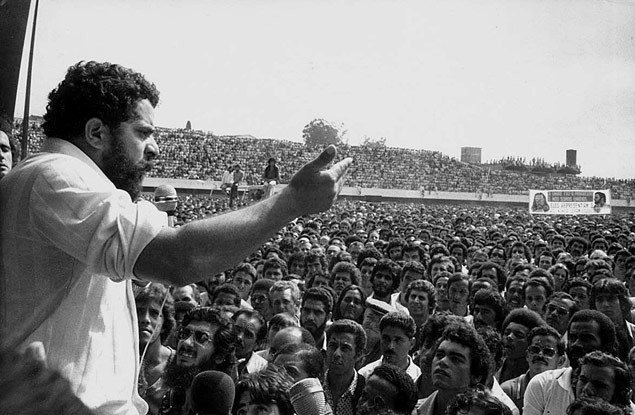
Luiz Inácio Lula da Silva, who emerged from Brazil’s working class and helped reshape the country’s political history, has been elected president for a fourth time. His journey from metalworking and trade union struggles through strikes to the presidency carries not only the story of one politician but also the long history of struggles by Brazil’s working people.
In the second round of the presidential election on 25 October, Lula, leader of the Workers’ Party (PT), won 51.79% of valid votes, defeating far-right candidate Flávio Bolsonaro, who received 48.21%. His lead of around 4.4 million votes made Lula the first politician in Brazilian history to be directly elected president four times.
Bolsonaro, however, refused to recognise the result and announced that he would challenge it in court.
Lula’s political history cannot be separated from Brazil’s class contradictions. During industrialisation, metalworkers organised against harsh working conditions. Under the military dictatorship, they defended not only wages but also trade union and democratic rights. Lula emerged from these struggles. In 1980 he helped found the Workers’ Party and later brought the trade union movement’s demands into parliamentary politics.
In a country where great fortunes exist alongside profound poverty, the election of a leader from the working class to the presidency four times has historical significance. Yet the distinction between political representation and economic power remains.
Social assistance programmes under Lula’s previous governments played an important role in lifting millions of people out of poverty. But those policies did not alter the fundamental ownership relations of Brazil’s economy. Large corporations, financial interests and the economic structure built around agricultural exports retained their power.
This contradiction also lies at the heart of Lula’s fourth term.
In an economic system dominated by capital, winning government through elections is not the same as giving workers control over the production and distribution of social wealth. Social policies may reduce inequality while the relationships that continually reproduce it remain in place.
The election also marks a new stage in the struggle between left-wing politics and the far right in Latin America. The Bolsonaro family retains support among conservative sections of society and is known for its political closeness to US President Donald Trump.
Lula, meanwhile, seeks to expand Brazil’s room for independent action internationally, continue cooperation with BRICS countries and secure a more influential position in a multipolar world.
However, pursuing a more independent foreign policy in the face of imperial power relations does not automatically eliminate class inequality at home. Links to international capital, foreign debt, pressure from financial markets and the economic power of large landowners continue to shape the government’s decisions.
Lula’s fourth election victory therefore represents both political continuity and unresolved social contradictions.
The strong presence of right-wing parties in Congress and Bolsonaro’s objections to the result signal political tensions that may emerge in the new term.
The future of Brazil’s working classes will be determined not simply by who holds the presidency but by struggles over wages, working conditions, land ownership, public services and the distribution of social wealth.
Having come from the workers’ movement, Lula has reached the head of state for a fourth time. Beyond protecting social gains, he now faces the responsibility of responding to the economic and democratic demands of the social groups that brought him to power.
Brazil’s election once again raises the question of which social forces political power serves and within which economic relationships it operates.
GOCCOM Brazil