


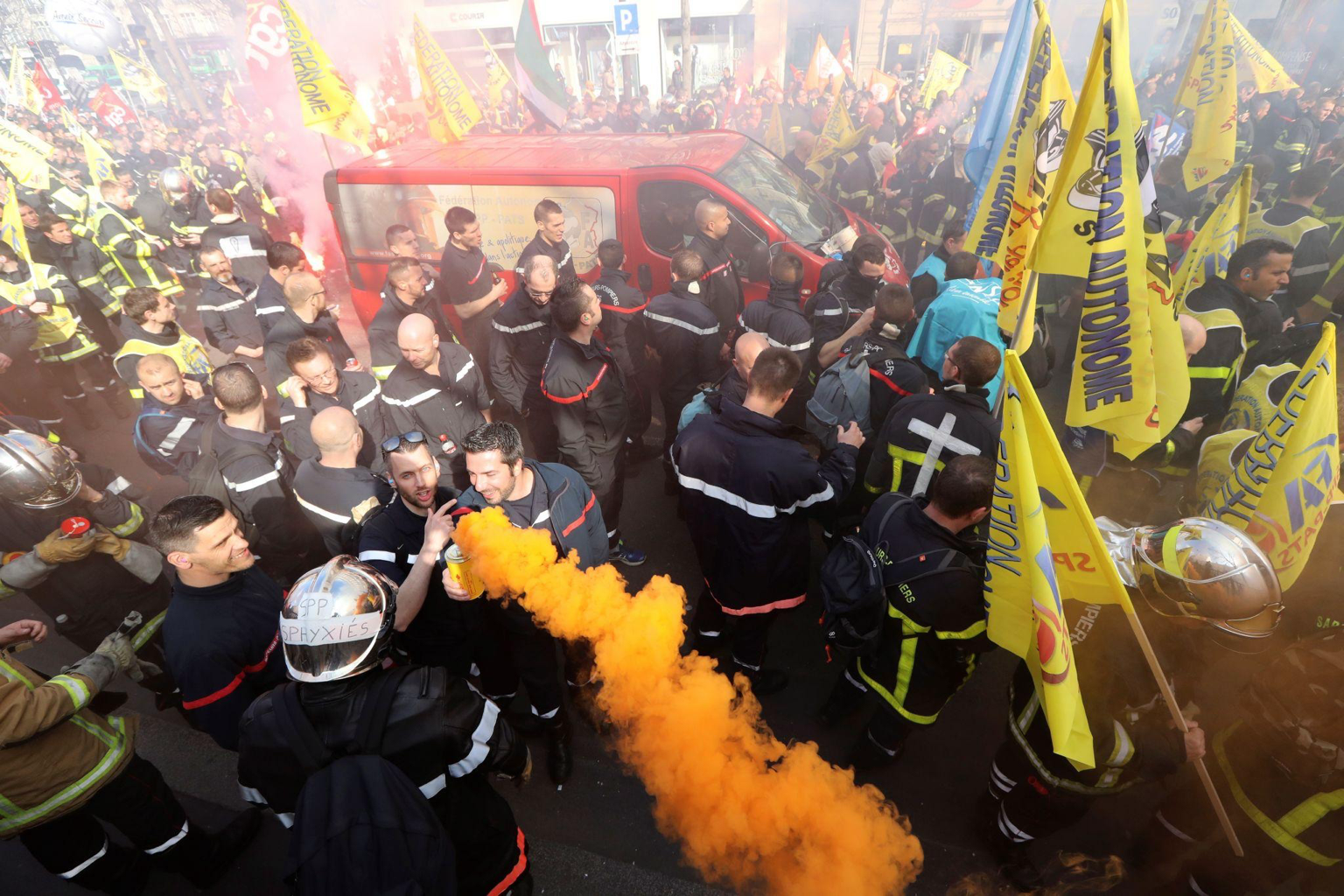
The strike launched by public sector workers in France over pay and working conditions was joined by protests by secondary school pupils that spread across the country. A broad cross-section of the workforce – from teachers to healthcare workers, and from firefighters to staff in public institutions – walked out on 29 September and took to the streets. Meanwhile, students organised protests and blockades at hundreds of secondary schools in response to staff shortages, overcrowded classrooms, dilapidated school buildings and inequalities in education.
At the heart of the protests lies the government’s 2027 budget policy and the increasingly severe loss of purchasing power faced by public sector workers. The government plans to freeze the index value used to determine public sector workers’ basic pay once again in 2027. This means another year in which public sector workers will not receive a general pay rise.
The trade unions, however, state that the wage losses, which have been ongoing for years, have now become unsustainable. Their demands are not limited to wage increases alone. Filling staff shortages in public services, improving working conditions, and allocating more resources to education and healthcare services are also among the key demands of the protests.
Around 170 demonstrations were held across France. Whilst the Ministry of the Interior reported that 206,000 people took part in the nationwide demonstrations, the CGT stated that attendance exceeded 300,000. In Paris, too, there is a significant discrepancy between the official figures and those provided by the trade unions.
Firefighters were one of the most visible groups taking part in the protests. Noting that staff and resource shortages had become even more apparent following the major wildfires that affected France, particularly during the summer months, firefighters are demanding improvements to their working conditions and pay.
Issues in the education sector, meanwhile, came into sharper focus on the same day as the public sector strike, as a student movement grew across the country.
The protests by secondary school pupils began on 21 September at the Saint-Exupéry Secondary School in Créteil, near Paris. The backlash against unfilled teaching posts quickly spread to other schools. The students highlighted not only the shortage of teachers and staff but also overcrowded classrooms, dilapidated school buildings and regional inequalities in education.
On 29 September, the student protests spread nationwide. Around 410 secondary schools were affected by the protests in various ways. The Ministry of Education recorded full blockades at 45 schools and attempted blockades at 46 others.
In the Paris suburbs in particular, inequalities in education are at the forefront of the students’ demands. In some schools, students report being taught in classes of 35 pupils, lessons being cancelled due to a shortage of teachers, and difficulties in accessing basic educational resources.
As the student movement has grown, clashes with the police have also occurred in some towns and cities. According to the latest statements from the authorities, at least 76 people were injured in the incidents, and approximately 440 were taken into custody. It has been reported that the majority of those detained are under the age of 18. However, it is noted that the vast majority of student protests across the country have taken place without incident.
The protests quickly became the focus of political debate. Whilst the government has accused some opposition politicians of exploiting the student movement for political ends, opposition representatives have criticised the police’s interventions. The Ministry of Education, whilst acknowledging that some of the students’ demands regarding educational conditions were legitimate, condemned the acts of violence.
The movement in France has thus gone beyond the scope of a one-day public sector strike. On the one hand, there are public sector workers claiming their purchasing power is declining; on the other, students taking to the streets to protest against staffing shortages, infrastructure issues and inequalities within the education system.
Whilst debates over the 2027 budget continue, the government is attempting to keep public spending under control. Trade unions, however, are opposing the idea that public sector workers and public services should bear the cost of the budget deficit.
Although the two movements that converged on the same streets on 29 September had different starting points, they are united around a common issue: how resources allocated to public services, workers’ wages and educational conditions will be shaped.
The next critical phase in France will be the negotiations between the government and the trade unions. Whilst the trade unions have warned that further industrial action may be on the cards if their demands are not met, the movement initiated by secondary school pupils continues in many towns and cities.
GOCCOM France